Tradescantia Care Guide
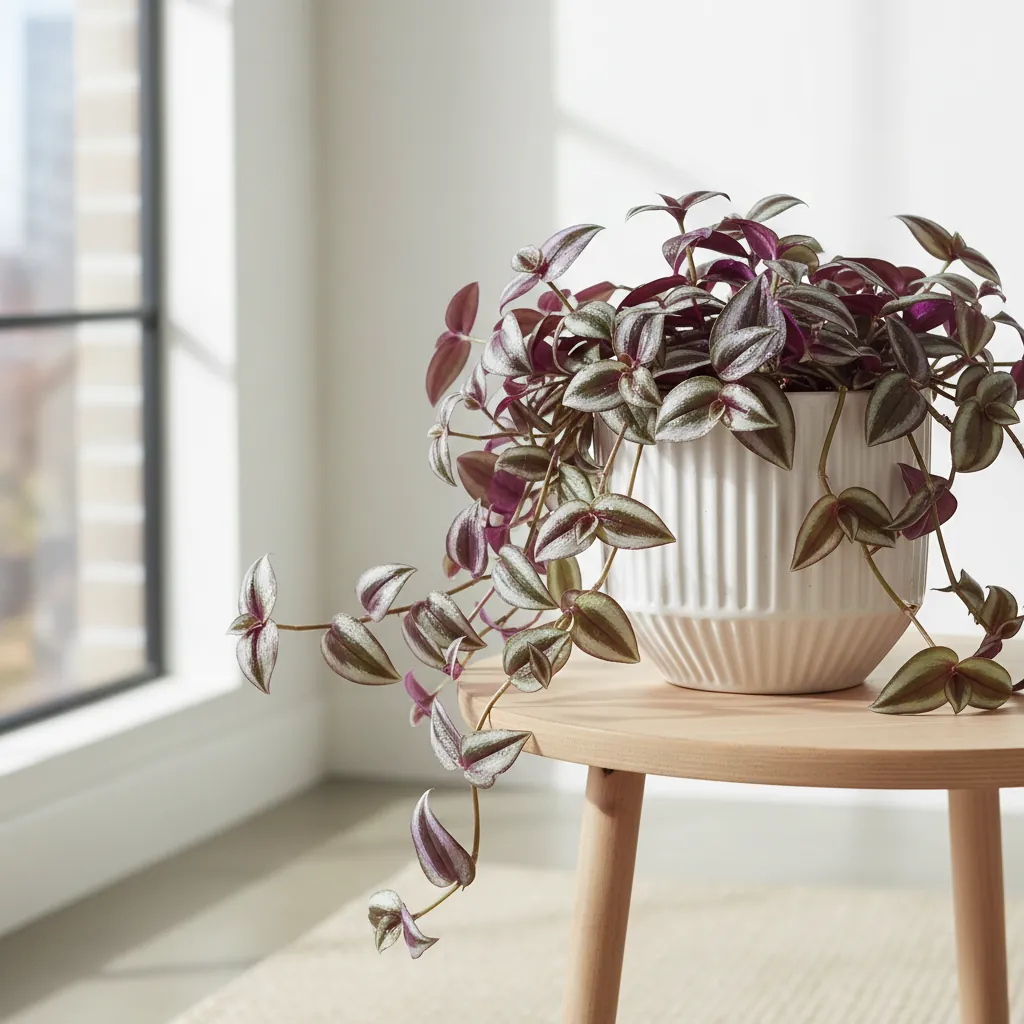
Tradescantia Care Guide
Contents
- Quick Care Summary
- How Often Should I Water Tradescantia?
- What Light Does Tradescantia Need?
- What Soil Is Best for Tradescantia?
- How Do I Propagate Tradescantia?
- What Are Common Tradescantia Problems?
- Frequently Asked Questions
Tradescantia, commonly known as spiderwort, inch plant, or wandering dude, is a popular houseplant prized for its vibrant, variegated foliage and easy-care nature. Its trailing stems adorned with striped or purple leaves make it a favorite for hanging baskets or shelves.
Quick Care Summary
- Light: Bright, indirect light with some gentle direct sun.
- Water: Keep soil evenly moist during growth; allow the top to dry between waterings.
- Humidity: Average household humidity; tolerates higher levels.
- Temperature: 18-24°C (65-75°F); keep above 10°C (50°F).
- Soil: Well-draining, peat-free, loam-based potting mix.
- Toxicity: Mildly toxic to pets; skin irritant for humans.
How Often Should I Water Tradescantia?
Water your Tradescantia regularly during the growing season, ensuring the soil remains lightly moist but not waterlogged. Let the top inch of soil dry before watering again. In winter, reduce watering frequency as growth slows. Overwatering can lead to root rot, so ensure proper drainage by emptying saucers after watering.
What Light Does Tradescantia Need?
Tradescantia thrives in bright, indirect light with some gentle direct sun to enhance leaf coloration. Avoid intense midday sun, which can fade or scorch the foliage. Low light causes the plant to become leggy and lose its vibrant hues. Place it near east- or west-facing windows for optimal growth.
What Soil Is Best for Tradescantia?
Use a well-draining, peat-free, loam-based potting mix. Ensure the pot has drainage holes to prevent waterlogging. Repot annually if roots outgrow the container, and pinch back stems during repotting to encourage bushier growth.
How Do I Propagate Tradescantia?
Tradescantia is incredibly easy to propagate. Take stem-tip cuttings or use trimmings from pruning. Place the cuttings in water or directly into moist potting mix. Roots will develop quickly at the nodes. To rejuvenate sparse plants, insert several cuttings back into the parent pot.
What Are Common Tradescantia Problems?
| Symptom | Cause | Solution |
|---|---|---|
| Yellowing leaves, mushy stems | Overwatering, root rot | Reduce watering, improve drainage; take healthy cuttings if roots are rotten. |
| Crispy brown tips | Dry air or inconsistent watering | Water regularly; increase humidity by misting or using a humidifier. |
| Fine webbing on leaves | Spider mites | Rinse foliage, raise humidity, treat with insecticidal soap. |
| White cottony tufts | Mealybugs | Dab with alcohol, treat with insecticidal soap. |
| Pale, weak growth | Insufficient light or nutrients | Move to brighter light; fertilize monthly during the growing season. |
Frequently Asked Questions
Is Tradescantia Toxic to Pets?
Yes, Tradescantia is mildly toxic to cats, dogs, and horses. Ingestion can cause mouth and stomach irritation, while skin contact may lead to dermatitis. Keep it out of reach of pets and children.
Why Is My Tradescantia Losing Its Color?
Low light causes Tradescantia to lose its vibrant stripes and revert to plain green. Move the plant to a brighter spot with some gentle direct sun. Pinch out plain-green shoots to maintain variegation.
How Do I Fix a Leggy Tradescantia?
Leggy growth is common in low light. Pinch back growing tips regularly to encourage bushiness. Use the cuttings to fill in bare areas in the pot.
Can I Grow Tradescantia Outdoors?
Tradescantia can be grown outdoors in USDA zones 8-12. In colder climates, bring it indoors before temperatures drop below 10°C (50°F).
Related guides
- Aglaonema Care Guide: How to Grow Chinese Evergreen Indoors
- The Best Fertilizer for Houseplants: A Comprehensive Guide
- Best LED Grow Lights for Indoor Plants: Full-Spectrum Options Tested
- Bird’s Nest Fern Care Guide
- Caladium Care Guide: How to Grow Vibrant Foliage Indoors