Bird’s Nest Fern Care Guide
Bird’s Nest Fern Care Guide
Contents
- Quick Care Summary
- How Much Light Does a Bird’s Nest Fern Need?
- How Often Should I Water My Bird’s Nest Fern?
- What Soil and Repotting Does My Fern Need?
- How Do I Propagate a Bird’s Nest Fern?
- What Are Common Problems with Bird’s Nest Ferns?
- FAQ: Bird’s Nest Fern Care
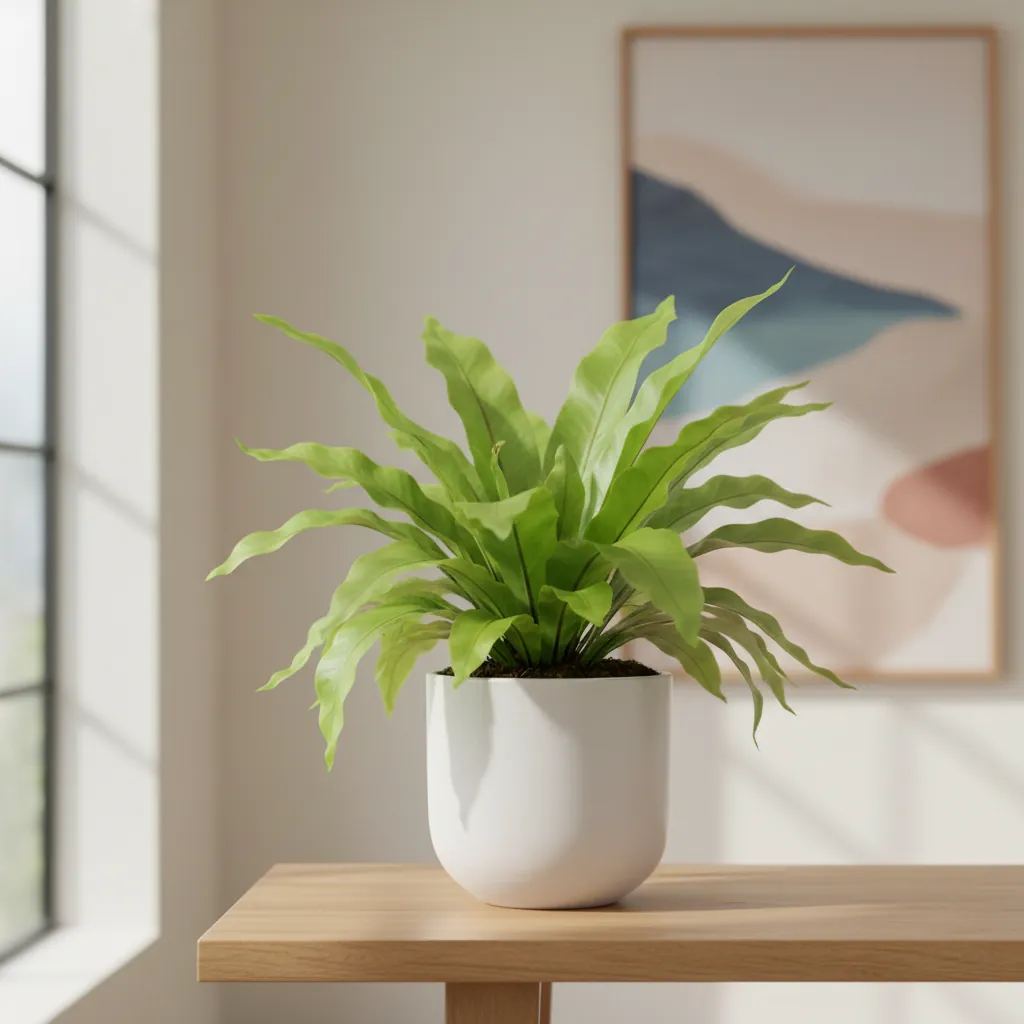
The Bird’s Nest Fern (Asplenium nidus) is a tropical epiphytic fern known for its lush, wavy fronds that radiate from a central rosette, resembling a bird’s nest. It’s a popular houseplant due to its unique foliage and relatively low-maintenance care requirements. Native to rainforests in Hawaii, Southeast Asia, and Australia, it thrives in humid, warm environments with indirect light, making it ideal for bathrooms, terrariums, or kitchens.
Quick Care Summary
- Light: Bright, indirect light. Avoid direct sunlight.
- Water: Keep soil moist but not soggy. Water when the top 1-2 inches of soil are dry.
- Humidity: High humidity (60% or higher). Use a humidifier or pebble tray.
- Temperature: 60-85°F (16-29°C). Avoid cold drafts.
- Soil: Well-draining, peat-based mix with compost or perlite.
- Toxicity: Non-toxic to pets.
How Much Light Does a Bird’s Nest Fern Need?
Bird’s Nest Ferns thrive in bright, indirect light. Place them near an east or north-facing window where they receive filtered sunlight. Direct sunlight can scorch the leaves, causing yellowing or browning. Low light is tolerated but may slow growth, so ensure they receive enough light to maintain vibrant foliage.
How Often Should I Water My Bird’s Nest Fern?
Water your Bird’s Nest Fern when the top 1-2 inches of soil feel dry. Avoid watering the center of the plant (the “nest”) to prevent rot. Ensure the soil remains consistently moist but not waterlogged. Overwatering can lead to root rot, while underwatering causes the fronds to dry out and turn crispy.
What Soil and Repotting Does My Fern Need?
Use a well-draining, peat-based potting mix enriched with compost or perlite for added aeration. Repotting is needed every 2-3 years or when the plant becomes root-bound. Choose a pot 1-2 inches larger in diameter. Repot in spring or summer when the plant is actively growing.
How Do I Propagate a Bird’s Nest Fern?
Propagation is done through spores found on the underside of mature fronds. Collect spores by placing a frond on a piece of paper until spores fall off. Sow spores on moist, sterile soil and cover with plastic to maintain humidity. Keep in bright, indirect light until new growth appears.
What Are Common Problems with Bird’s Nest Ferns?
- Yellow Leaves: Overwatering or insufficient drainage. Check soil moisture and ensure proper drainage.
- Brown Tips: Low humidity or underwatering. Increase humidity and adjust watering schedule.
- Pests: Spider mites and mealybugs. Rinse fronds with water or treat with neem oil.
- Root Rot: Caused by soggy soil. Repot in fresh, well-draining soil and trim affected roots.
FAQ: Bird’s Nest Fern Care
1. Can Bird’s Nest Ferns tolerate low light?
Yes, they can tolerate low light, but growth may slow. Bright, indirect light is ideal.
2. How do I increase humidity for my fern?
Use a humidifier, place the plant on a pebble tray filled with water, or mist regularly.
3. Why are my fern’s leaves turning brown?
Brown tips often indicate low humidity or underwatering. Ensure consistent moisture and increase humidity.
4. Is a Bird’s Nest Fern safe for pets?
Yes, it’s non-toxic to cats and dogs.
5. How often should I fertilize my fern?
Fertilize monthly during the growing season (April-September) with a balanced, diluted houseplant fertilizer.
Related guides
- Aglaonema Care Guide: How to Grow Chinese Evergreen Indoors
- Chinese Evergreen Care Guide
- English Ivy Care Guide
- Fiddle Leaf Fig Care Guide
- Lucky Bamboo Care Guide