Caladium Care Guide: How to Grow Vibrant Foliage Indoors
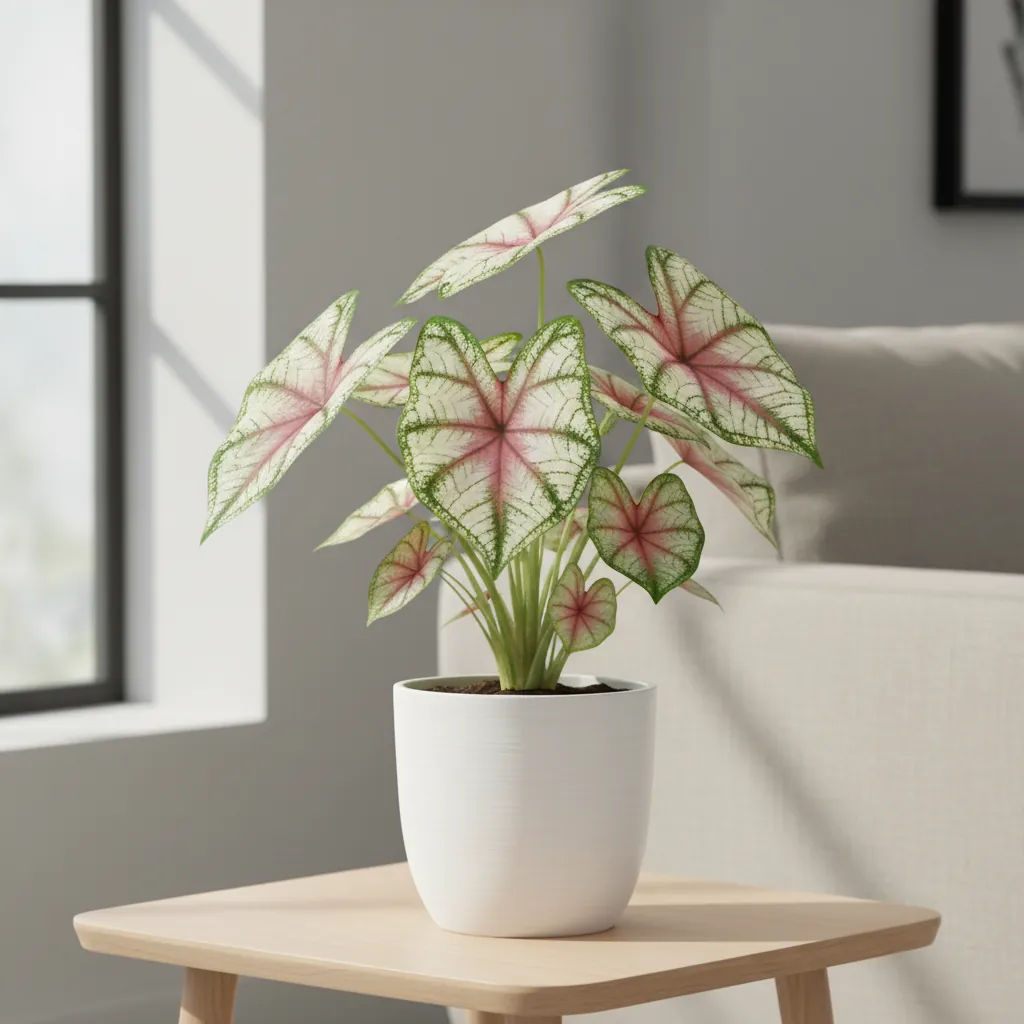
Caladium Care Guide: How to Grow Vibrant Foliage Indoors
Contents
- Quick Care Summary
- How Often to Water Caladiums?
- Best Light & Placement for Caladiums?
- Soil & Repotting Requirements
- How to Propagate Caladiums?
- Common Problems & Solutions
- Frequently Asked Questions
Caladiums are tropical plants prized for their striking, heart-shaped leaves in vibrant shades of pink, red, white, and green. Ideal for shaded indoor spaces, these low-maintenance plants add dramatic color where most flowering plants struggle. Proper care involves consistent moisture, warmth, and indirect light to maintain their vivid foliage from spring through fall.
Quick Care Summary
- Light: Bright indirect light (no direct sun)
- Water: Keep soil consistently moist (never soggy)
- Humidity: >60% (use pebble trays or humidifiers)
- Temperature: 70-85°F days / >60°F nights
- Soil: Well-draining mix with perlite/organic matter
- Toxicity: Toxic to pets and humans if ingested
How Often to Water Caladiums?
Water when the top 1-2 inches of soil feel dry, typically every 3-5 days in warm weather. Reduce frequency in cooler temperatures or dormancy. Use room-temperature water and ensure pots have drainage holes to prevent tuber rot. Signs of underwatering include drooping or yellowing leaves, while overwatering causes mushy stems.
Best Light & Placement for Caladiums?
Place caladiums in bright, indirect light (e.g., north-facing windows or shaded east-facing spots). Avoid:
- Direct afternoon sun (causes leaf scorch with brown patches)
- Deep shade (reduces leaf color intensity)
Rotate pots weekly for even growth. In humidity below 50%, group plants together or use pebble trays.
Soil & Repotting Requirements
Ideal Mix: 2 parts peat moss, 1 part perlite, 1 part compost. pH: 5.5-6.5.
Repotting:
- Do so in spring when tubers outgrow containers
- Use pots 2-3 inches wider than tubers
- Plant “eyes” (knobby bumps) facing upward, 2 inches deep
How to Propagate Caladiums?
- Tuber Division (Spring):
- Cut tubers into sections, each with ≥1 eye
- Let cuts dry 2-3 days before planting
- Offset Separation:
- Gently remove small tubers from parent plants
- Pot individually in moist soil
Common Problems & Solutions
| Symptom | Likely Cause | Fix |
|---|---|---|
| Yellow leaves | Over/underwatering | Adjust watering; ensure drainage |
| Brown edges | Low humidity/heat stress | Increase humidity; move from heat vents |
| Drooping | Cold temps (<60°F) | Relocate to warmer spot |
| No growth | Dormancy (fall/winter) | Reduce watering; resume care in spring |
| Pests | Spider mites/aphids | Wipe leaves with insecticidal soap; improve airflow |
Frequently Asked Questions
Do caladiums need sun or shade?
They thrive in partial to full shade indoors. Some varieties tolerate morning sun, but most prefer bright indirect light to prevent leaf burn.
Why are my caladium’s leaves small?
Small leaves often indicate:
- Insufficient light (move closer to a window)
- Nutrient deficiency (apply balanced liquid fertilizer monthly)
- Crowded tubers (divide and repot)
Can caladiums grow indoors year-round?
Yes, but they may enter dormancy in winter. To prolong growth:
- Maintain >60°F temperatures
- Use grow lights if natural light is limited
- Keep humidity above 50%
Are caladiums toxic to cats/dogs?
Yes. All parts contain calcium oxalate crystals, causing oral irritation if ingested. Keep out of reach of pets.
Related guides
- Aglaonema Care Guide: How to Grow Chinese Evergreen Indoors
- The Best Fertilizer for Houseplants: A Comprehensive Guide
- Best LED Grow Lights for Indoor Plants: Full-Spectrum Options Tested
- Bird’s Nest Fern Care Guide
- care for oxalis plant