Rex Begonia Care Guide
Rex Begonia Care Guide
Contents
- Quick Care Summary
- How Often Should I Water My Rex Begonia?
- What Light Is Best for Rex Begonias?
- What Soil and Potting Mix Should I Use?
- How Do I Propagate a Rex Begonia?
- What Are Common Rex Begonia Problems?
- Frequently Asked Questions
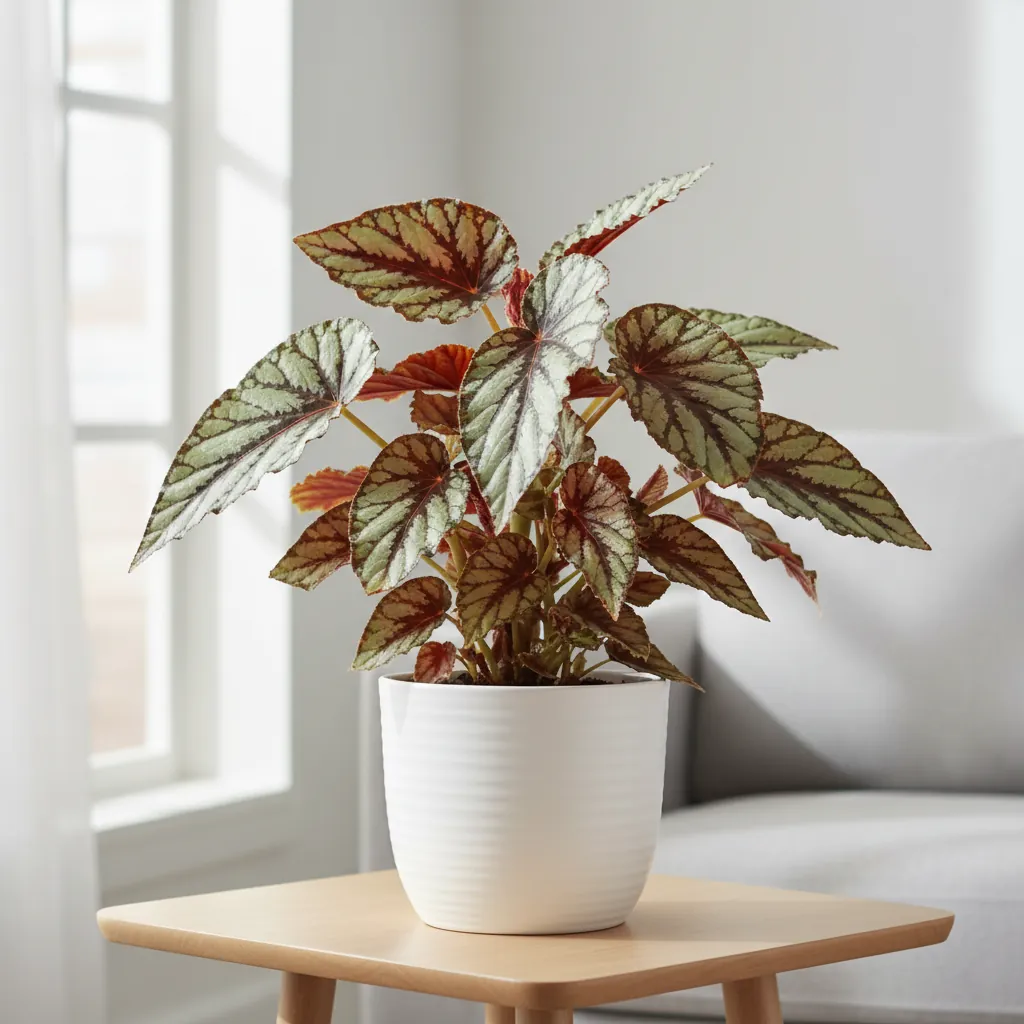
Rex begonias are prized for their stunning, vividly colored, and intricately patterned leaves, making them a popular choice among houseplant enthusiasts. While their small pink or white flowers are secondary, their foliage steals the show. These tropical plants thrive with proper care but require attention to humidity, light, and watering.
Quick Care Summary
- Light: Bright, indirect light; avoid direct sunlight.
- Water: Keep soil moist but well-drained; avoid waterlogging.
- Humidity: 50% or higher; use a humidifier or pebble tray.
- Temperature: 60–75°F (15–24°C); avoid drafts and sudden changes.
- Soil: Well-draining, loose mix (e.g., coco coir, orchid bark, perlite).
- Toxicity: Toxic to pets if ingested.
How Often Should I Water My Rex Begonia?
Rex begonias prefer slightly damp soil but are prone to root rot if overwatered. Water when the top inch of soil feels dry, typically once or twice a week. Use tepid water and ensure excess drains away. Reduce watering during dormancy (winter), allowing the soil to dry slightly between waterings.
What Light Is Best for Rex Begonias?
Provide bright, filtered light, such as near a north or east-facing window. Avoid direct sunlight, which can scorch the leaves. Rotate the plant weekly for even growth. If natural light is insufficient, fluorescent grow lights can supplement.
What Soil and Potting Mix Should I Use?
Rex begonias thrive in a well-draining, loose soil mix. A recommended blend is 1 part coco coir, 1 part orchid bark, and 1 part perlite. Use shallow pots with drainage holes, as these plants have shallow roots. Repot every 1–2 years in spring when the plant becomes root-bound.
How Do I Propagate a Rex Begonia?
Propagate Rex begonias through leaf cuttings, stem cuttings, or rhizome sections in spring:
- Leaf cuttings: Cut a healthy leaf into wedges or insert the entire leaf into moist soil.
- Stem cuttings: Take a 2–3-inch stem tip and plant it in a mix of sand and peat moss.
- Rhizome cuttings: Divide the rhizome into 1–3-inch segments with leaves and plant horizontally.
Enclose cuttings in a propagation case or plastic bag to maintain humidity until roots form (3–4 weeks).
What Are Common Rex Begonia Problems?
- Yellow leaves: Overwatering, poor drainage, or insufficient light.
- Crispy leaf edges: Low humidity; increase moisture with a humidifier or pebble tray.
- Root rot: Caused by waterlogged soil; ensure proper drainage.
- Pests: Watch for spider mites and mealybugs; treat with insecticidal soap.
- Leaf drop: Often due to dormancy in winter; reduce watering until growth resumes.
Frequently Asked Questions
Do Rex Begonias Go Dormant?
Yes, some Rex begonias enter dormancy in winter, shedding leaves and slowing growth. Reduce watering and move the plant to a cooler, dim location until new growth appears in spring.
Can Rex Begonias Grow in Low Light?
While they tolerate low light, Rex begonias perform best in bright, indirect light. Insufficient light can lead to leggy growth and faded leaf colors.
How Do I Increase Humidity for My Rex Begonia?
Use a humidifier, place the plant on a pebble tray with water, or group it with other humidity-loving plants. Avoid misting, which can cause leaf spots.
Are Rex Begonias Toxic to Pets?
Yes, Rex begonias are toxic to pets if ingested. Keep them out of reach of cats and dogs.
Related guides
- Aglaonema Care Guide: How to Grow Chinese Evergreen Indoors
- The Best Fertilizer for Houseplants: A Comprehensive Guide
- Best LED Grow Lights for Indoor Plants: Full-Spectrum Options Tested
- Bird’s Nest Fern Care Guide
- Caladium Care Guide: How to Grow Vibrant Foliage Indoors