Lucky Bamboo Care Guide
Lucky Bamboo Care Guide
Contents
- Quick Care Summary
- How Often Should I Water My Lucky Bamboo?
- What Kind of Light Does Lucky Bamboo Need?
- How Do I Repot Lucky Bamboo?
- Can I Propagate Lucky Bamboo?
- What Are Common Lucky Bamboo Problems?
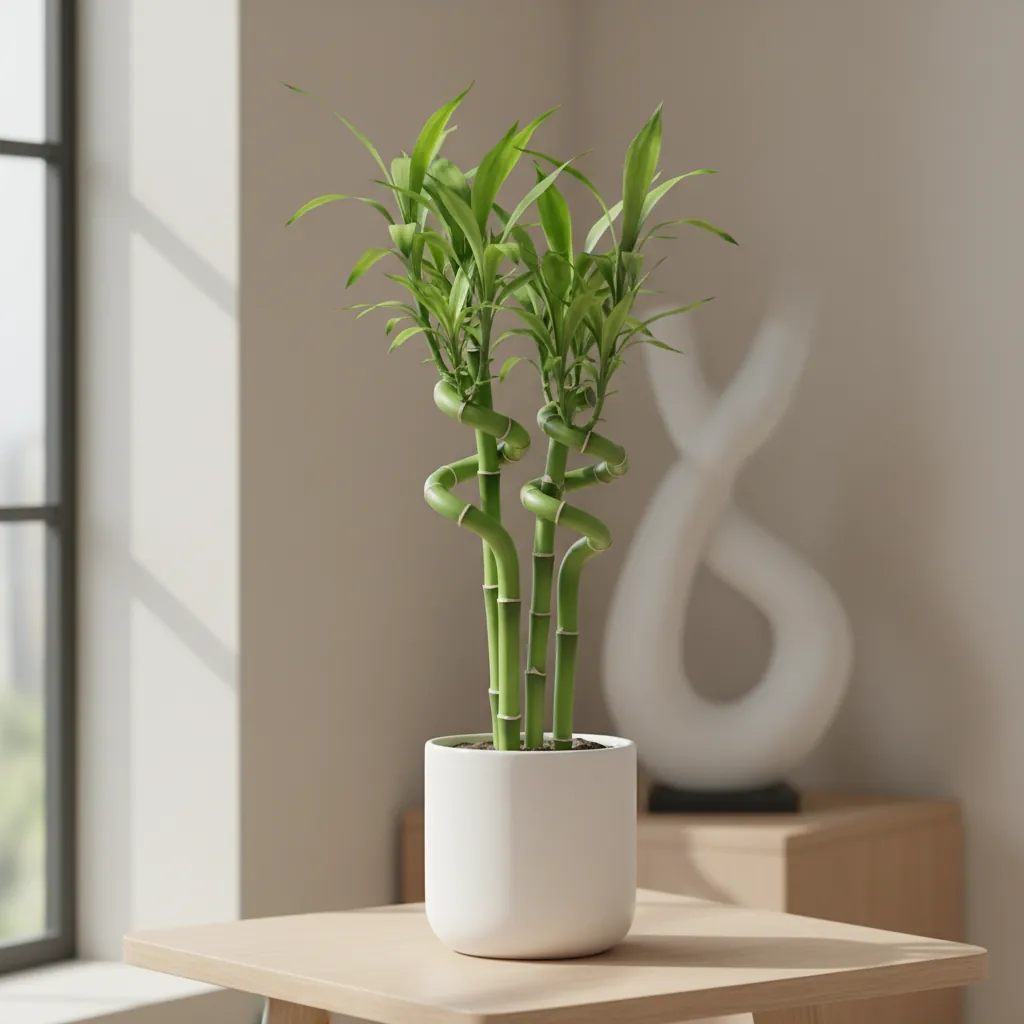
Lucky bamboo (Dracaena sanderiana) is a popular houseplant known for its resilience, simple care requirements, and significance in Feng Shui as a symbol of good luck and prosperity. Despite its bamboo-like appearance, it’s actually a member of the Dracaena family and thrives in indirect light and minimal maintenance, making it ideal for homes and offices.
Quick Care Summary
Here’s a quick overview of lucky bamboo care:
- Light: Bright, indirect sunlight.
- Water: Change water weekly if grown hydroponically; keep soil slightly damp if potted.
- Humidity: Prefers moderate humidity but adapts well to average indoor levels.
- Temperature: 65–95°F (18–35°C).
- Soil: Well-draining soil if potted; hydroponic growth is common.
- Toxicity: Toxic to cats and dogs.
How Often Should I Water My Lucky Bamboo?
Lucky bamboo can be grown in water or soil. If grown hydroponically, change the water every 7–10 days to prevent algae and root rot. Use filtered or distilled water, as tap water with chlorine or fluoride can harm the plant. If grown in soil, keep it slightly moist but avoid overwatering, which can cause root rot.
What Kind of Light Does Lucky Bamboo Need?
Lucky bamboo thrives in bright, indirect light. Direct sunlight can scorch its leaves, causing brown edges or yellowing. Low light is tolerated, but growth may slow. If the plant appears pale or leggy, move it to a brighter location.
How Do I Repot Lucky Bamboo?
Repot lucky bamboo when its roots outgrow the container. For hydroponic plants, transfer to a larger vase with fresh water and clean pebbles. For soil-grown plants, use well-draining soil and a pot with drainage holes. Trim any overcrowded roots before repotting.
Can I Propagate Lucky Bamboo?
Yes, lucky bamboo is easy to propagate. Cut a healthy stalk (with at least two segments) just above a node, remove the bottom leaves, and place it in water. Roots will develop in a few weeks. Once established, you can transplant it into soil or keep it hydroponic.
What Are Common Lucky Bamboo Problems?
Common issues include yellow leaves, pests, and root rot:
- Yellow Leaves: Caused by too much sunlight, poor water quality, or overwatering. Trim yellow parts to prevent spreading.
- Pests: Mealybugs and mites can affect lucky bamboo. Remove pests manually and treat with rubbing alcohol or insecticidal soap.
- Root Rot: Prevent by changing water regularly (hydroponics) or ensuring proper drainage (soil).
FAQ
Is lucky bamboo real bamboo?
No, lucky bamboo is Dracaena sanderiana, not true bamboo. It’s a tropical plant related to succulents.
How long does lucky bamboo live?
With proper care, lucky bamboo can live for several years and continue growing.
Can lucky bamboo grow in soil?
Yes, it can grow in soil or water. Soil-grown plants tend to live longer and grow larger.
Why are my lucky bamboo leaves turning yellow?
Yellow leaves are often caused by overwatering, poor water quality, or too much direct sunlight.
Is lucky bamboo toxic to pets?
Yes, lucky bamboo is toxic to cats and dogs if ingested. Keep it out of reach.
Related guides
- Chinese Evergreen Care Guide
- English Ivy Care Guide
- Fiddle Leaf Fig Care Guide
- Pilea Peperomioides Care Guide: How to Grow a Thriving Chinese Money Plant
- Pothos Care: A Complete Guide to Growing Devil’s Ivy Indoors