Snake Plant Care Guide: Low-Light Resilience and Easy Maintenance
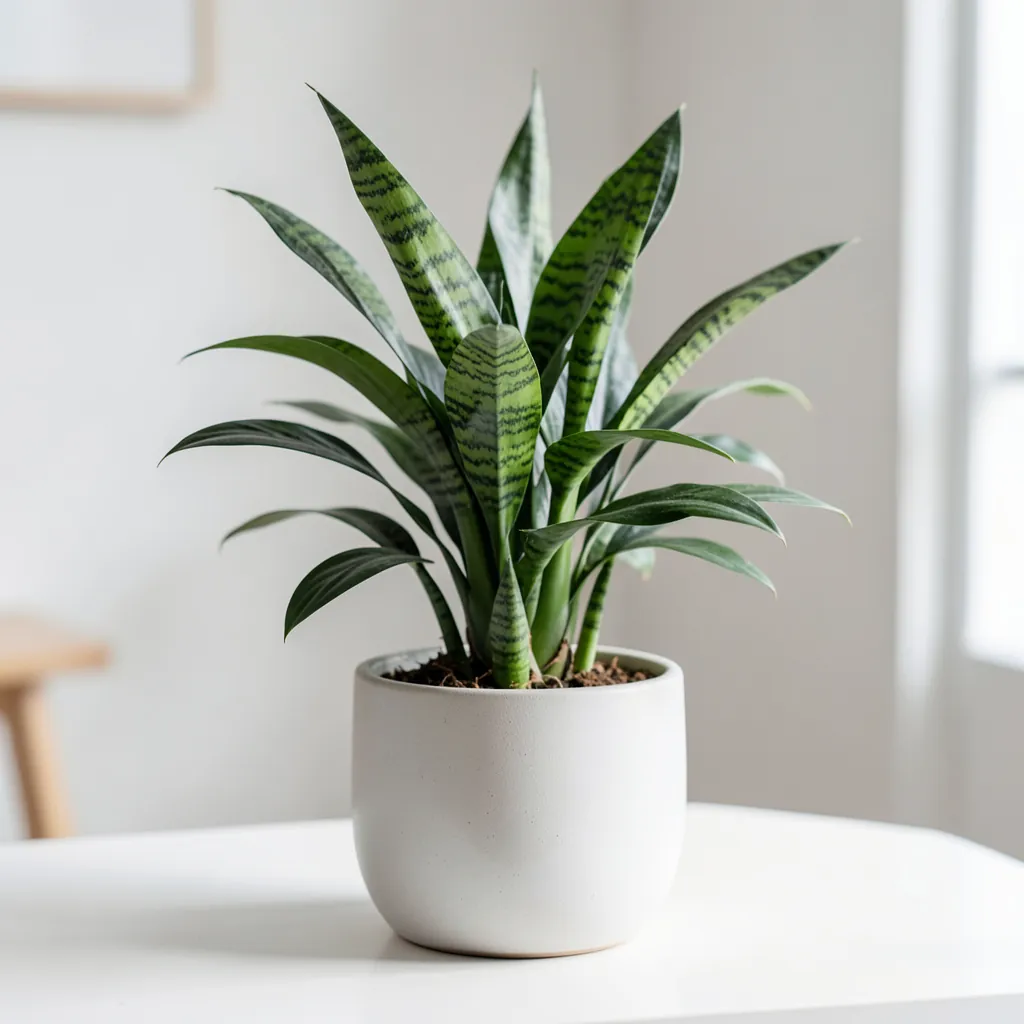
Snake Plant Care Guide: Low-Light Resilience and Easy Maintenance
Contents
- Light
- Watering
- Humidity and Temperature
- Soil and Fertilizer
- Repotting
- Propagation
- 🩺 Common Problems
- 🐾 Pet Safety and Toxicity
- 💡 Care Tips
- ❓ FAQ
🪴 Snake plants (Sansevieria or Dracaena trifasciata), also called mother-in-law’s tongue, are popular for their architectural upright leaves and extreme tolerance to neglect, low light, and irregular watering. Their air-purifying qualities and pet-safe status (see toxicity section for cautions) make them ideal for beginners.
Light: Low to bright indirect
Water: When soil is completely dry
Humidity: Low to average (40-60%)
Temperature: 65-80°F (18-27°C)
Soil: Well-draining (cactus mix)
Difficulty: Very easy
Toxicity: Mildly toxic to cats and dogs
Mature Size: 1-4 ft tall (varies by cultivar)
Light
How much light does a snake plant need?
Snake plants tolerate low light but grow best in bright indirect light (8-10 hours daily). Avoid harsh midday sun, which can scorch leaves. Signs of inadequate light: slower growth, fading variegation (e.g., yellow edges on ‘Laurentii’), or leaning toward light sources.
Watering
How often should I water a snake plant?
Water only when soil is completely dry:
- Spring/summer: Every 2-3 weeks
- Fall/winter: Every 4-6 weeks
Signs of overwatering: Yellow/mushy leaves, foul soil odor (root rot).
Signs of underwatering: Wrinkled leaves, brown tips (rare; snake plants prefer drought).
Humidity and Temperature
Snake plants thrive in average home humidity (40-60%) and tolerate dry air. Keep temperatures above 50°F (10°C); ideal range is 65-80°F (18-27°C). Avoid cold drafts.
Soil and Fertilizer
Use fast-draining soil (e.g., cactus mix with perlite). Fertilize lightly (half-strength) monthly in spring/summer; avoid fertilizing in fall/winter.
Repotting
Repot every 2-3 years in spring:
- Choose a pot 2-3cm wider with drainage.
- Remove plant, trim rotted roots, and replant at same depth.
- Water lightly and wait for soil to dry before next watering.
Propagation
Method 1: Division (best for variegated types)
- Separate pups from mother plant with roots attached.
- Plant in well-draining soil.
Method 2: Leaf cuttings (reverts variegation to green)
- Cut leaf into 3-4” sections; let dry 1-2 days.
- Plant upright in soil; roots form in 4-8 weeks.
🩺 Common Problems
| Symptom | Cause | Fix |
|---|---|---|
| Yellow leaves | Overwatering/rot | Dry out soil; trim rotted roots. |
| Brown tips | Underwatering/low humidity | Water slightly more often. |
| Drooping leaves | Overwatering or cold | Check soil; move to warmer spot. |
| No growth | Low light or dormant | Move to brighter light or wait. |
🐾 Pet Safety and Toxicity
Snake plants contain saponins, which can cause nausea, vomiting, or diarrhea if ingested by cats or dogs. Place out of reach or opt for non-toxic plants if pets are prone to chewing.
💡 Care Tips
- Err on the side of underwatering—root rot is the #1 killer.
- Dust leaves to maintain photosynthesis in low light.
- Avoid cold drafts below 50°F (10°C).
❓ FAQ
Is snake plant toxic to pets?
Yes, mildly toxic to cats and dogs if ingested.
Can snake plants grow in no light?
They survive but won’t thrive; low indirect light is minimal requirement.
Why are my snake plant’s leaves yellow?
Overwatering is the most common cause.
How fast do snake plants grow?
Slowly—typically a few inches per year in ideal conditions.
Related guides
- Snake Plant (Sansevieria): The Ultimate Beginner’s Houseplant
- The Best Low-Light Indoor Plant: Snake Plant
- Best Plants for the Bedroom
- Best Soil for Houseplants: A Complete Guide for Healthy Roots
- Cast Iron Plant Care: The Ultimate Low-Light Houseplant Guide