Sansevieria Care Guide: Low-Light Resilience Explained 🪲
Sansevieria Care Guide: Low-Light Resilience Explained 🪲
Contents
- Light
- Watering
- Humidity and Temperature
- Soil and Fertilizer
- Repotting
- Propagation
- 🩺 Common Problems
- 🐾 Pet Safety and Toxicity
- 💡 Care Tips
- ❓ FAQ
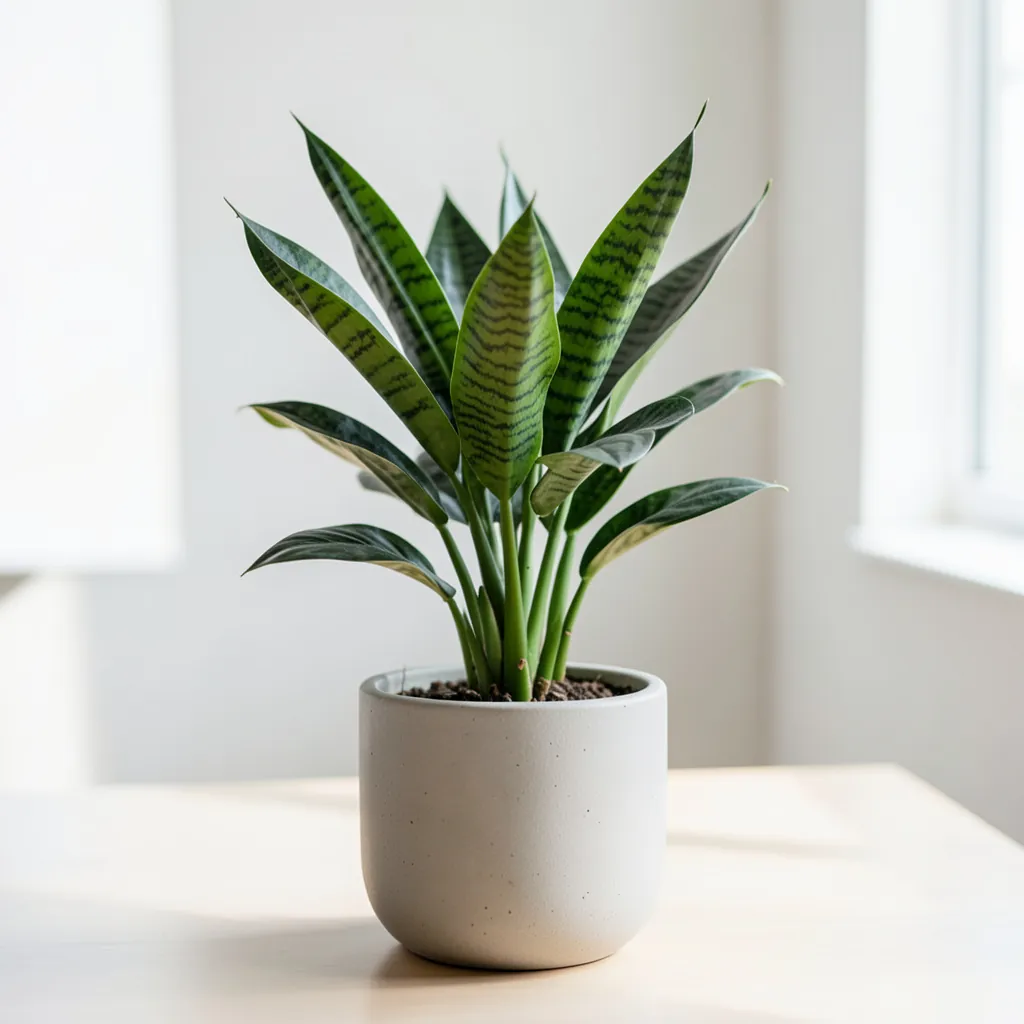
Sansevieria, commonly known as snake plant or mother-in-law’s tongue, is a popular indoor plant due to its striking appearance and low-maintenance nature. It thrives in a variety of light conditions, including low light, making it a versatile choice for homes and offices.
Light: Low to bright indirect
Water: When the top inch of soil is dry
Humidity: Low to average
Temperature: 65-80°F (18-27°C)
Soil: Well-draining
Difficulty: Easy
Toxicity: Toxic to cats and dogs
Mature Size: 2-3 ft
Light
Sansevieria thrives in low to bright indirect light. While it can survive in low light, growth may slow, and variegated varieties may lose their color. Too much direct sunlight can scorch the leaves, causing bleached patches.
Signs of too little light: Slowed growth, pale leaves, loss of variegation.
Signs of too much light: Bleached or scorched leaves.
Watering
Water sparingly, allowing the soil to dry completely between waterings. Overwatering is the most common cause of problems, including root rot.
Seasonal differences:
- Spring/Summer: Water every 2-3 weeks.
- Autumn/Winter: Water every 4-6 weeks.
Signs of overwatering: Yellow, mushy leaves; foul-smelling soil.
Signs of underwatering: Wrinkled or curling leaves, brown tips.
Humidity and Temperature
Sansevieria prefers low humidity and thrives in temperatures between 65-80°F (18-27°C). Avoid placing it near cold drafts or radiators.
Soil and Fertilizer
Use a well-draining cactus or succulent mix. A blend of peat-free compost and perlite or sand works well. Fertilize monthly from April to September with a diluted houseplant fertilizer. Avoid feeding during winter.
Repotting
Repot every 2-3 years or when roots circle the pot. Choose a pot 2-3cm larger in diameter.
Steps for repotting:
- Gently remove the plant from its pot.
- Tease apart the roots and trim any damaged ones.
- Place the plant in a new pot with fresh soil.
- Water lightly and allow the soil to dry before watering again.
Propagation
Sansevieria can be propagated by division or leaf cuttings.
Propagation steps (division):
- Separate pups or offsets from the parent plant.
- Pot each pup in its own container with well-draining soil.
Propagation steps (leaf cuttings):
- Cut a healthy leaf into 8-10cm sections.
- Let the cuttings callus over for 24-48 hours.
- Insert cuttings into soil with the original bottom end facing down.
- Keep the soil barely moist and wait for roots to develop.
🩺 Common Problems
| Symptom | Cause | Fix |
|---|---|---|
| Yellow leaves | Overwatering | Check soil; repot if root rot is present. |
| Brown/crispy tips | Underwatering or low humidity | Water thoroughly; increase humidity slightly. |
| Mushy leaves/root rot | Overwatering | Repot in fresh, well-draining soil. |
| No growth | Low light or dormancy | Move to brighter light; wait for spring. |
| Curling leaves | Underwatering | Water thoroughly. |
🐾 Pet Safety and Toxicity
Sansevieria is toxic to cats and dogs if ingested. Keep it out of reach of pets and wash your hands after handling.
💡 Care Tips
- Let the soil dry completely before watering.
- Avoid placing in direct sunlight to prevent leaf scorch.
- Repot sparingly—every 2-3 years is enough.
- Propagate in spring for best results.
- Keep away from pets and children due to toxicity.
❓ FAQ
Is Sansevieria toxic to cats and dogs?
Yes, it is toxic if ingested.
How often should I water Sansevieria?
Water every 2-3 weeks in spring/summer and every 4-6 weeks in autumn/winter.
Why are my Sansevieria leaves turning yellow?
This is usually due to overwatering. Check the soil and reduce watering frequency.
Can Sansevieria survive in low light?
Yes, it tolerates low light but grows better in bright indirect light.
How fast does Sansevieria grow?
It’s a slow grower, especially in low light. Expect noticeable growth during spring and summer.
How do I propagate Sansevieria?
Propagate by division or leaf cuttings in spring.
Related guides
- Snake Plant (Sansevieria): The Ultimate Beginner’s Houseplant
- The Best Low-Light Indoor Plant: Snake Plant
- Best Plants for the Bedroom
- Best Soil for Houseplants: A Complete Guide for Healthy Roots
- Cast Iron Plant Care: The Ultimate Low-Light Houseplant Guide