Spathiphyllum Peace Lily Care Guide
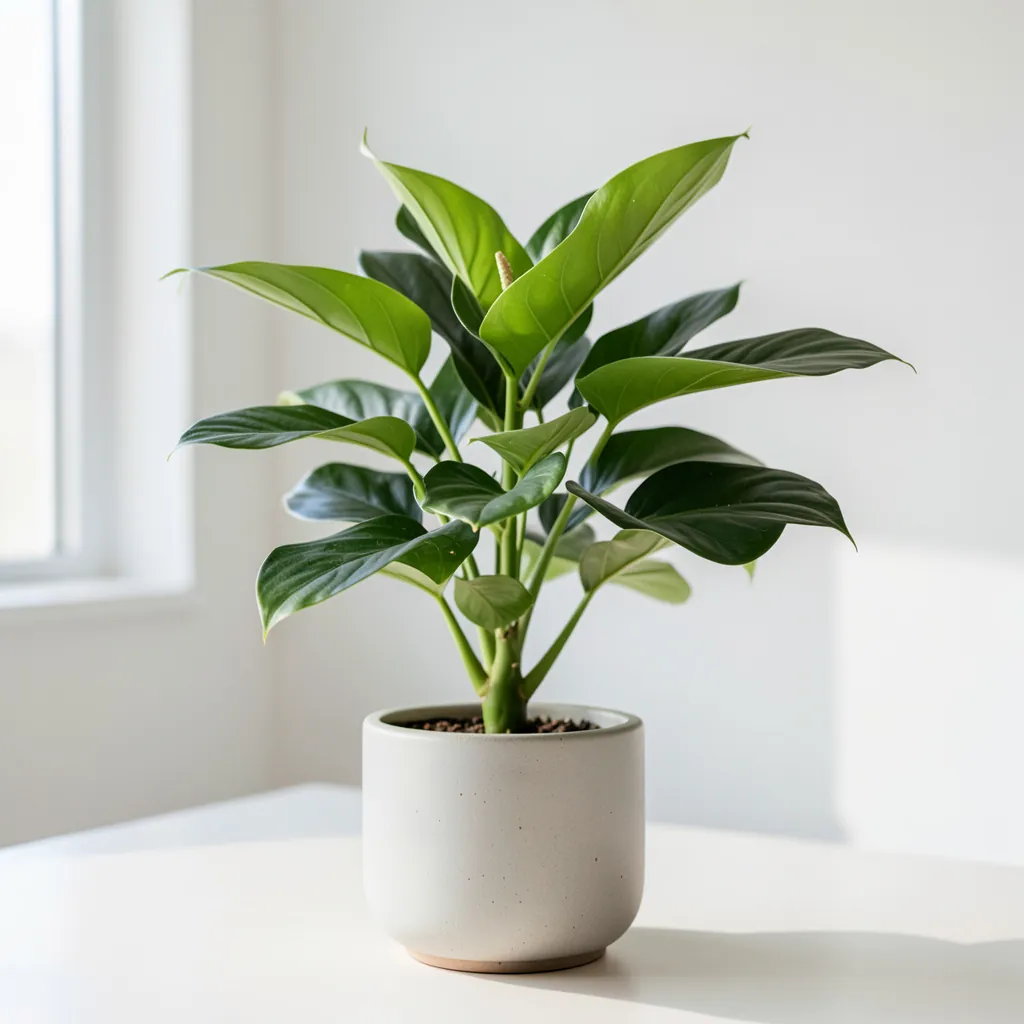
Spathiphyllum Peace Lily Care Guide
Contents
- Light
- Watering
- Humidity and Temperature
- Soil and Fertilizer
- Repotting
- Propagation
- 🩺 Common Problems
- 🐾 Pet Safety and Toxicity
- 💡 Care Tips
- ❓ FAQ
🪴 Peace lilies (Spathiphyllum) are popular houseplants known for their elegant white blooms and glossy foliage. They thrive in indirect light, improve indoor air quality, and are relatively low-maintenance, making them ideal for beginners.
Light: Bright indirect
Water: When the top inch of soil is dry
Humidity: Average to high
Temperature: 65-80°F (18-27°C)
Soil: Well-draining, rich in organic matter
Difficulty: Easy
Toxicity: Toxic to cats and dogs
Mature Size: 1-6 ft (depends on cultivar)
Light
What light conditions do peace lilies need?
Peace lilies thrive in bright, indirect light but tolerate low light. Direct sun scorches leaves, while too little light reduces flowering. Signs of stress:
- Too much light: Brown, crispy leaf edges.
- Too little light: Slow growth, fewer blooms.
Watering
How often should I water a peace lily?
Water when the top inch of soil is dry, typically weekly in summer and less in winter. Use room-temperature rainwater or filtered water to avoid fluoride damage. Signs of trouble:
- Overwatering: Yellow leaves, root rot.
- Underwatering: Dramatic drooping (revives quickly after watering).
Humidity and Temperature
Do peace lilies need humidity?
They prefer moderate to high humidity (40-60%). Brown leaf tips signal dry air. Increase humidity by:
- Misting leaves.
- Placing the pot on a tray of damp gravel.
Avoid temperatures below 55°F (13°C) and drafts.
Soil and Fertilizer
What soil mix is best?
Use well-draining, peat-based soil with perlite or bark. Fertilize every 6-8 weeks in spring/summer with half-strength balanced fertilizer. Over-fertilizing causes brown leaf tips.
Repotting
When and how to repot?
Repot every 1-2 years in spring if root-bound. Steps:
- Choose a pot 1-2 inches larger.
- Use fresh, well-draining soil.
- Gently loosen roots and replant at the same depth.
Propagation
How to propagate peace lilies?
Divide mature plants in spring:
- Remove the plant from its pot.
- Separate clumps with roots and stems.
- Replant divisions in small pots.
🩺 Common Problems
| Symptom | Cause | Solution |
|---|---|---|
| Yellow leaves | Overwatering | Let soil dry; trim rotten roots |
| Brown tips | Dry air/over-fertilizing | Increase humidity; flush soil |
| Drooping | Underwatering | Water thoroughly |
| No blooms | Low light | Move to brighter spot |
🐾 Pet Safety and Toxicity
Peace lilies contain calcium oxalate crystals, which are toxic if ingested by cats or dogs. Symptoms include oral irritation and vomiting. Keep out of reach or opt for pet-safe plants.
💡 Care Tips
- Wipe leaves monthly to remove dust.
- Rotate the pot weekly for even growth.
- Avoid tap water if leaf browning occurs.
- Trim spent blooms at the base.
❓ FAQ
Q: How often to water a peace lily?
A: When the top inch of soil is dry, typically weekly.
Q: Are peace lilies toxic to cats?
A: Yes—keep away from pets.
Q: Why won’t my peace lily bloom?
A: Likely due to low light; move to a brighter spot.
Q: Can peace lilies grow in low light?
A: Yes, but flowering may be reduced.
Related guides
- How to Care for Alocasia: A Complete Guide
- Areca Palm Care Guide
- Best Plants for Bathrooms: Top Picks for High Humidity
- bird of paradise care guide
- Bird of Paradise Plant Care: Complete Indoor Growing Guide