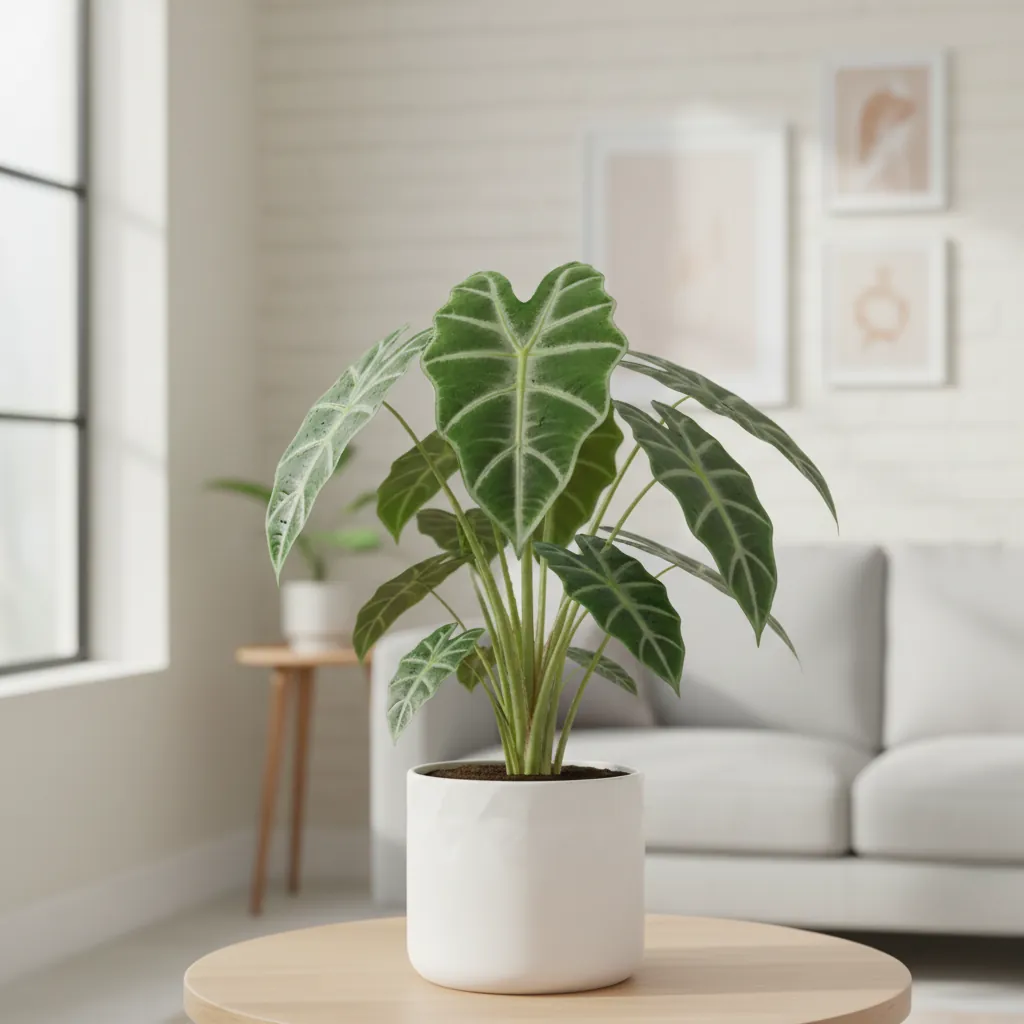
How to Care for Alocasia: A Complete Guide
How to Care for Alocasia: A Complete Guide
Contents
- Quick Care Summary
- How Often Should I Water My Alocasia?
- What Light Conditions Does Alocasia Need?
- What Soil Should I Use for Alocasia?
- How Do I Propagate Alocasia?
- What Are Common Alocasia Problems?
Alocasia, commonly called elephant’s ear, is a tropical houseplant known for its bold, architectural leaves and striking vein patterns. Native to Southeast Asia’s rainforests, Alocasia thrives in warm, humid environments with bright, indirect light. Its popularity stems from its ability to create a jungle-like aesthetic indoors, though it requires specific care to flourish.
Quick Care Summary
- Light: Bright, indirect light (avoid direct sun).
- Water: Keep soil consistently moist but not waterlogged. Water when the top 1-2 inches of soil is dry.
- Humidity: High humidity (50-70%) is ideal; use a humidifier or pebble tray.
- Temperature: Maintain 16-30°C (60-85°F) during the growing season; keep above 10°C (50°F) in winter.
- Soil: Well-draining, airy mix (e.g., peat-free compost with perlite or orchid bark).
- Toxicity: Toxic to pets and humans if ingested.
How Often Should I Water My Alocasia?
Water your Alocasia when the top 1-2 inches of soil feel dry. During the growing season (spring to autumn), this typically means watering every 5-7 days. Reduce watering in winter to every 10-14 days while the plant is dormant. Overwatering can lead to root rot, so ensure the pot has drainage holes and avoid letting the plant sit in standing water.
What Light Conditions Does Alocasia Need?
Alocasia thrives in bright, indirect light, mimicking the dappled sunlight of its natural forest habitat. Place it near an east- or west-facing window, or use a sheer curtain to filter direct sun from south-facing windows. Low light slows growth and causes leggy stems, while direct sun scorches the leaves. Consider a grow light if natural light is insufficient.
What Soil Should I Use for Alocasia?
Use a well-draining, airy soil mix to prevent waterlogging. A blend of 40% peat-free compost, 30% perlite or pumice, 20% orchid bark, and 10% coco coir works well. Repot every 1-2 years in spring, moving up only one pot size to avoid over-potting, which can retain excess moisture and harm roots.
How Do I Propagate Alocasia?
Alocasia can be propagated by division or from corms (small bulb-like offsets). Divide the plant during repotting, ensuring each section has roots. For corms, place them on damp sphagnum moss in a warm, humid environment until shoots and roots develop. Propagation is best done in spring or early summer.
What Are Common Alocasia Problems?
Yellow Leaves
- Cause: Overwatering or underwatering.
- Solution: Check soil moisture and adjust watering frequency.
Brown Leaf Edges
- Cause: Low humidity or fertilizer salt buildup.
- Solution: Increase humidity and flush soil with water to remove excess salts.
Root Rot
- Cause: Overwatering or poor drainage.
- Solution: Repot in fresh, well-draining soil and reduce watering.
Pest Infestation (e.g., Spider Mites)
- Cause: Low humidity.
- Solution: Increase humidity and treat with neem oil or insecticidal soap.
FAQ
Is Alocasia toxic to pets?
Yes, Alocasia contains calcium oxalate crystals, which are toxic if ingested by pets or humans.
Why is my Alocasia dropping leaves?
Leaf drop can occur during dormancy in winter or due to environmental stress (e.g., cold drafts, overwatering).
Can Alocasia grow in low light?
While Alocasia tolerates lower light, its growth will slow, and leaves may become smaller. Bright, indirect light is ideal.
How do I increase humidity for my Alocasia?
Use a humidifier, place the plant on a pebble tray, or group it with other plants to create a microclimate.
Does Alocasia go dormant?
Yes, many Alocasia species go dormant in winter, losing leaves. Reduce watering and keep the plant warm until spring.
Related guides
- Areca Palm Care Guide
- Best Plants for Bathrooms: Top Picks for High Humidity
- bird of paradise care guide
- Bird of Paradise Plant Care: Complete Indoor Growing Guide
- Bird’s Nest Fern Care Guide