Nerve Plant (Fittonia) Care Guide
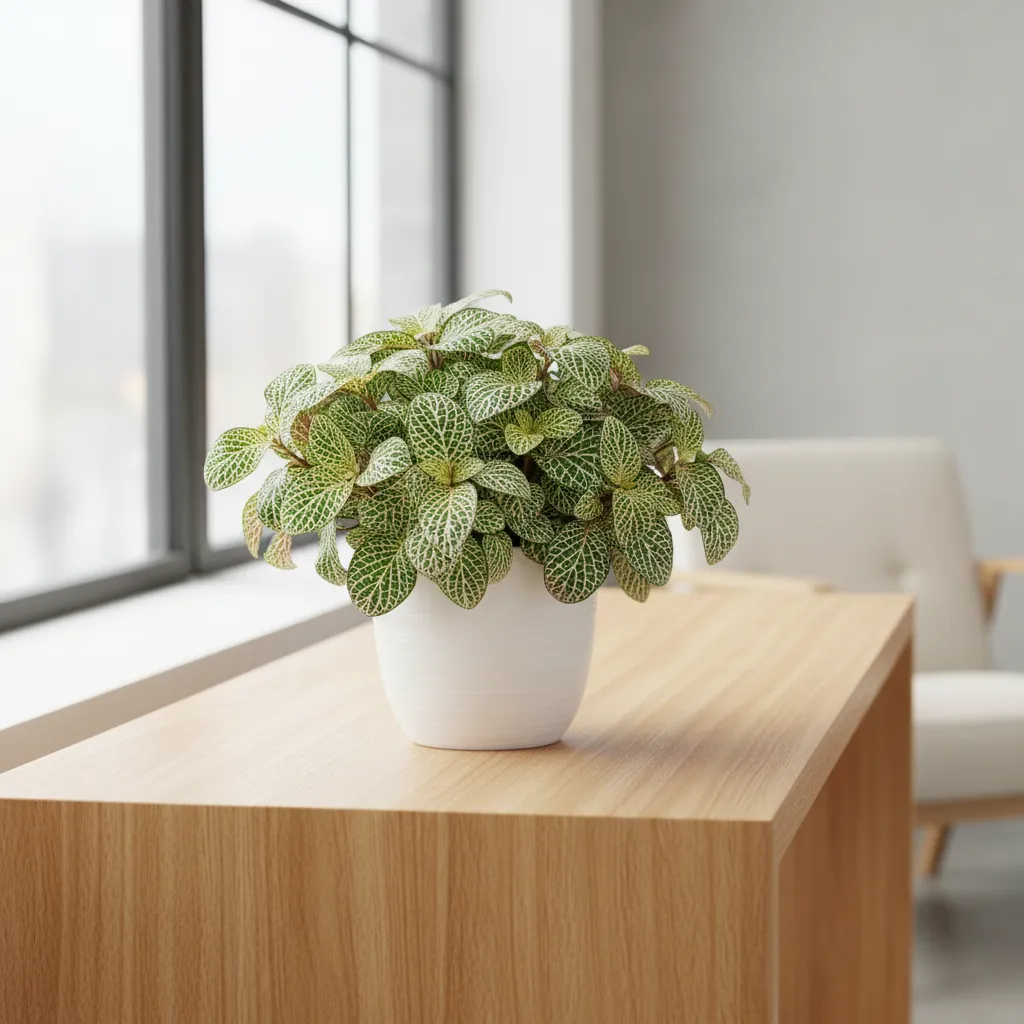
Nerve Plant (Fittonia) Care Guide
Contents
- Quick Care Summary
- How Often Should I Water My Nerve Plant?
- What’s the Best Light for a Nerve Plant?
- Soil & Repotting Guide
- How to Propagate Nerve Plants
- Common Nerve Plant Problems
- FAQs
The nerve plant (Fittonia albivenis) is a tropical houseplant prized for its striking veined foliage in colors like pink, red, or white against dark green leaves. Native to South American rainforests, it thrives in high humidity and bright, indirect light but requires consistent care to avoid wilting or leaf scorch.
Quick Care Summary
- Light: Bright, indirect light (east/west/north-facing windows; avoid direct sun)
- Water: Keep soil evenly moist; water when top 1” of soil dries (1–2x weekly)
- Humidity: 50%+ (use pebble trays, terrariums, or humidifiers)
- Temperature: 60–85°F (avoid drafts and sudden changes)
- Soil: Well-draining mix (peat-based with perlite/orchid bark)
- Toxicity: Non-toxic and pet-safe
How Often Should I Water My Nerve Plant?
Water when the top inch of soil feels dry, typically 1–2 times weekly. Nerve plants wilt dramatically if underwatered but suffer root rot if overwatered. Use room-temperature water and ensure pots have drainage holes.
Conflicting advice: Source 3 recommends “constantly moist soil,” while Source 1 suggests letting the top inch dry slightly. To reconcile, aim for consistent moisture without sogginess.
What’s the Best Light for a Nerve Plant?
Place in bright, indirect light (e.g., near an east-facing window with sheer curtains). Low light dulls leaf colors, while direct sun scorches leaves. Fluorescent/grow lights also work well.
Soil & Repotting Guide
Ideal Soil Mix
- Peat-based potting soil
- 20–30% perlite or orchid bark for aeration
Repotting Steps
- Repot every 2–3 years or when roots outgrow the pot.
- Choose a pot 1–2” wider than the current one.
- Trim dead roots and refresh soil in spring.
How to Propagate Nerve Plants
Stem Cuttings (Easiest Method)
- Cut a 4–6” stem tip below a leaf node.
- Remove lower leaves and dip in rooting hormone (optional).
- Plant in moist soil or water; roots form in 2–4 weeks.
Division
Gently separate rooted stems during repotting and plant separately.
Common Nerve Plant Problems
| Issue | Cause | Solution |
|---|---|---|
| Wilting | Underwatering | Water immediately; plant often revives within hours |
| Yellow leaves | Overwatering/root rot | Trim rotten roots, repot in fresh soil |
| Brown, crispy edges | Low humidity/direct sun | Move to shade, boost humidity |
| Leggy growth | Low light | Prune back stems, move to brighter spot |
| Pests (aphids, spider mites) | Dust/poor air circulation | Wipe leaves with neem oil or insecticidal soap |
FAQs
Why is my nerve plant drooping?
It’s likely thirsty. Water thoroughly, and it should perk up within hours.
Can nerve plants grow in terrariums?
Yes! Their love for humidity makes them ideal for terrariums or cloches.
Do nerve plants flower?
They occasionally produce small, insignificant white blooms. Prune these to focus energy on foliage.
How do I increase humidity?
Group plants, use a pebble tray, or place in a bathroom. Avoid misting (can promote fungal issues).
Can I grow nerve plants outdoors?
Only in USDA zones 11–12 as a ground cover. Elsewhere, keep indoors year-round.
Related guides
- Areca Palm Care Guide
- Bird of Paradise Plant Care: Complete Indoor Growing Guide
- Boston Fern Care Guide: How to Keep Your Fern Thriving
- Bromeliad Care Guide: How to Grow and Maintain Indoor Bromeliads
- Calathea Care Guide: How to Keep Your Prayer Plant Thriving