Money Tree (Pachira aquatica) Care Guide: How to Grow Your Lucky Plant
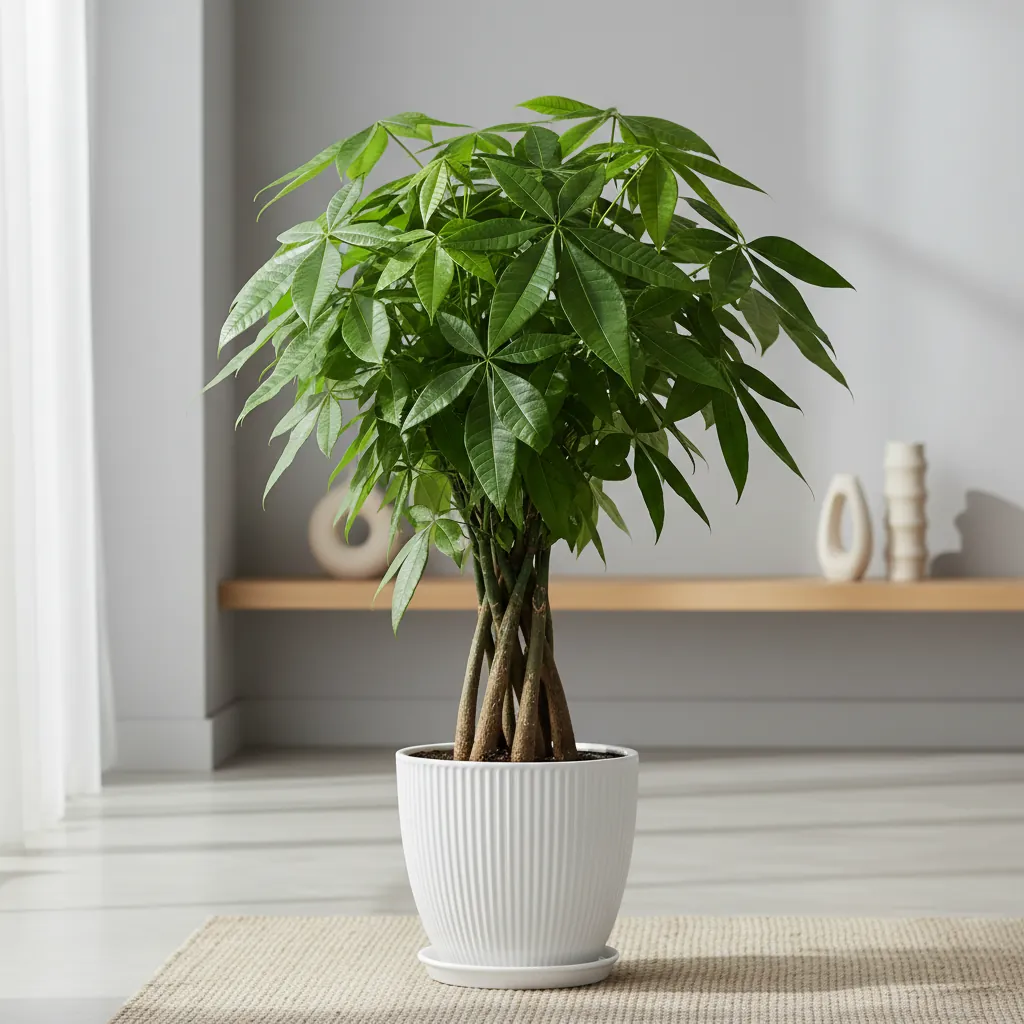
Money Tree (Pachira aquatica) Care Guide: How to Grow Your Lucky Plant
Contents
- Quick Care Summary
- How Often Should I Water My Money Tree?
- Where Should I Place My Money Tree for Optimal Light?
- What Soil and Repotting Does a Money Tree Need?
- How Do I Propagate a Money Tree?
- Common Problems and Solutions
The Money Tree (Pachira aquatica) is a popular tropical houseplant known for its braided trunk and glossy, hand-shaped leaves. Native to Central and South America, it’s associated with good luck and prosperity, making it a common gift. This low-maintenance, pet-friendly plant thrives in bright, indirect light with moderate watering.
Quick Care Summary
- Light: Bright, indirect light (tolerates morning sun; avoid harsh afternoon light)
- Water: When top 1–2 inches of soil are dry, roughly every 1–2 weeks
- Humidity: Average household humidity (40–50%); benefits from occasional misting in dry conditions
- Temperature: 65–80°F (avoid drafts below 55°F)
- Soil: Well-draining potting mix (peat moss with perlite or coarse sand)
- Toxicity: Non-toxic to pets (confirmed by ASPCA)
How Often Should I Water My Money Tree?
Water thoroughly when the top 1–2 inches of soil feel dry, typically every 7–14 days. Signs of overwatering (yellow leaves, mushy stems) and underwatering (dry leaf edges, drooping) require immediate adjustment. Always empty the saucer after watering to prevent root rot.
Watering Tips:
- Use room-temperature water.
- Reduce frequency in winter (growth slows).
- If leaves yellow, check soil moisture before watering.
Where Should I Place My Money Tree for Optimal Light?
- Best spots: Near east-facing windows (gentle morning light) or 3–5 feet from south/west windows with sheer curtains.
- Low-light survival: May tolerate medium light but grows slower; leaf spacing increases.
- Rotate the plant weekly to ensure even growth.
Conflicting advice: One source suggests it can handle direct sun until 10 a.m., while others advise only indirect light. Monitor leaf health—scorched spots mean too much sun.
What Soil and Repotting Does a Money Tree Need?
- Soil mix: 2 parts peat moss, 1 part perlite, 1 part coarse sand (ensures drainage).
- Repotting: Every 2–3 years in spring; size up 1–2 inches in pot diameter.
- Drainage is critical: Use pots with holes and avoid “wet feet.”
How Do I Propagate a Money Tree?
- Take 6-inch stem cuttings with 2–3 nodes in spring/summer.
- Root in water or moist soil (4–6 weeks).
- Plant in soil once roots are 2 inches long.
Braided trunks are created by growers weaving young stems—home propagation won’t replicate this.
Common Problems and Solutions
| Issue | Cause | Fix |
|---|---|---|
| Yellow leaves | Overwatering or poor drainage | Let soil dry fully; repot if root rot exists |
| Brown tips | Low humidity or fertilizer salts | Mist leaves or use a humidifier; flush soil |
| Leaf drop | Sudden temperature changes/drafts | Move away from vents/doors |
| Pests (spider mites, scale) | Dry conditions | Wipe with neem oil or insecticidal soap |
FAQ
Q: Can I grow a money tree outdoors?
A: Only in USDA zones 10–12 (e.g., Florida). Elsewhere, keep indoors year-round.
Q: Why are the leaves on my braided money tree turning yellow?
A: Overwatering is likely, but if only one braided stem yellows, it may naturally die off—remove it cleanly.
Q: How fast does a money tree grow?
A: Moderate growth (6–12 inches/year) in ideal conditions; slower in low light.
Q: Can I use leaf shine products?
A: No—wipe leaves with a damp cloth to remove dust instead.
Related guides
- Areca Palm Care Guide
- Bird of Paradise Plant Care: Complete Indoor Growing Guide
- Boston Fern Care Guide: How to Keep Your Fern Thriving
- Bromeliad Care Guide: How to Grow and Maintain Indoor Bromeliads
- Calathea Care Guide: How to Keep Your Prayer Plant Thriving