how to prune monstera
Contents
- When should I prune my Monstera?
- How do I prune a Monstera?
- How to encourage upward growth?
- Pruning vs. Propagation: Key Differences
- 🩺 Common Problems
- 🐾 Pet Safety and Toxicity
- 💡 Care Tips
- ❓ FAQ
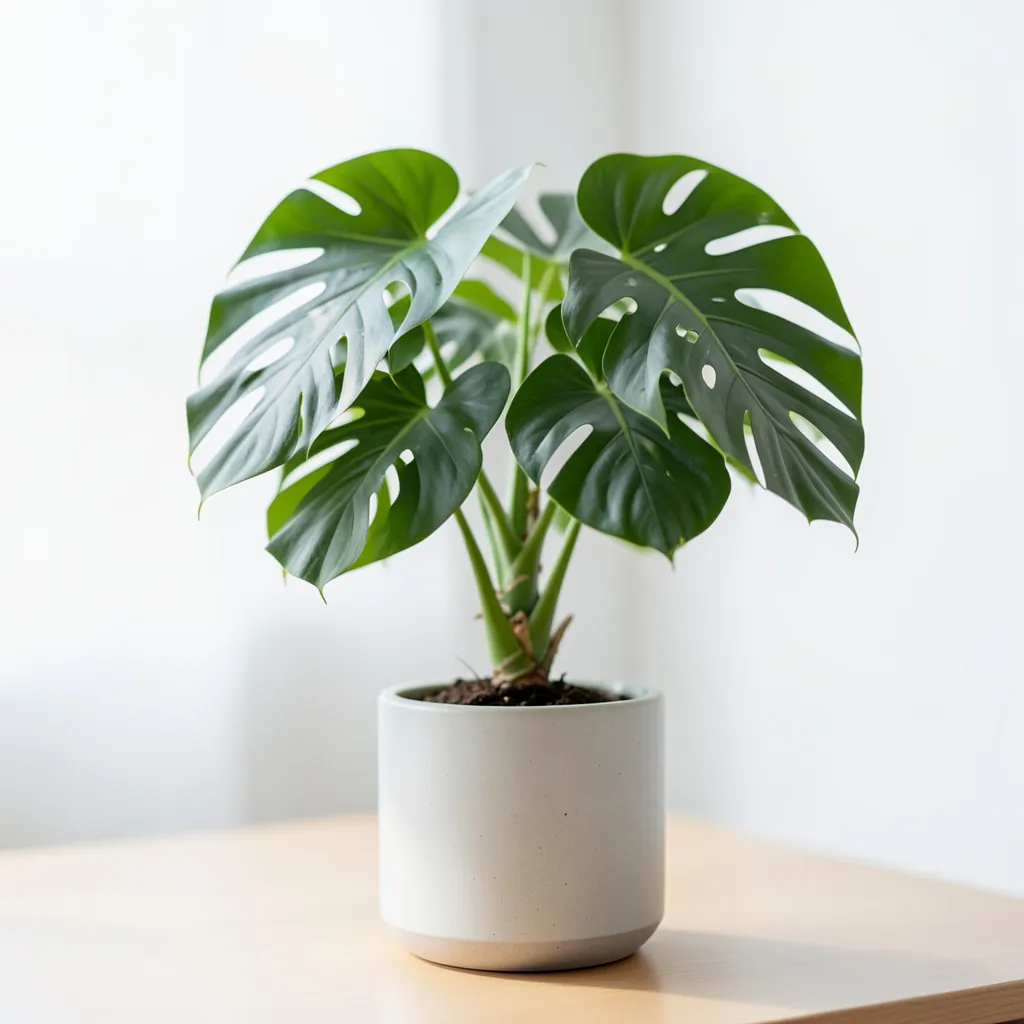
🪴 Monstera deliciosa, commonly known as the Swiss Cheese Plant, is a tropical houseplant prized for its large, glossy leaves with distinctive fenestrations (holes). Pruning helps control size, remove damaged growth, and encourage fuller foliage.
Light: Bright indirect
Water: When the top inch of soil is dry
Humidity: Average to high
Temperature: 65-80°F (18-27°C)
Soil: Well-draining
Difficulty: Easy
Toxicity: Toxic to cats and dogs
Mature Size: 2-3 ft indoors (up to 10 ft with support)
When should I prune my Monstera?
Prune in spring or summer during active growth for quicker recovery. However, you can remove dead/diseased leaves year-round. Avoid pruning recently repotted or stressed plants.
How do I prune a Monstera?
Tools needed: Clean, sharp pruning shears (disinfect with alcohol) + gloves (sap irritates skin).
- For diseased/damaged leaves: Cut the petiole (leaf stem) where it meets the main stem, just above a node.
- For size control: Trim vines just above a leaf node (angled 45° cut). Remove ≤⅓ of foliage to avoid shock.
- For propagation: Cut below a node (ensure the cutting has ≥1 node).
- Aerial roots: Trim sparingly—they aid stability—but cut back if unruly.
How to encourage upward growth?
- Provide a moss pole or trellis for climbing (natural growth habit).
- Redirect vines by tying them to supports.
Pruning vs. Propagation: Key Differences
| Aspect | Pruning | Propagation |
|---|---|---|
| Cut Location | Above a node (size/damage control) | Below a node (to include node) |
| Purpose | Shape plant, remove damage | Grow new plants |
| Cuttings | Discard or compost | Root in water/soil |
🩺 Common Problems
| Symptom | Cause | Fix |
|---|---|---|
| Yellow leaves | Overwatering, poor drainage | Check soil; prune affected leaves |
| Brown/crispy edges | Low humidity, underwatering | Increase humidity; water deeply |
| Leggy growth | Insufficient light | Move to brighter spot; prune |
| No fenestrations | Immature plant, low light | Wait or adjust light conditions |
🐾 Pet Safety and Toxicity
Monstera contains calcium oxalate crystals, causing mouth irritation, drooling, and vomiting in cats and dogs. Keep out of reach or opt for pet-safe plants like spider plants.
💡 Care Tips
- Rotate the plant monthly for even growth.
- Wipe leaves with a damp cloth to remove dust.
- Avoid over-pruning—never remove more than 30% at once.
❓ FAQ
Can I prune my Monstera in winter?
Yes, but only for dead/diseased leaves. Major pruning is best in spring/summer.
How often should I prune?
Annually for size control; as needed for damage.
Will pruning make my Monstera bushier?
Yes—cutting above nodes stimulates new growth near the cut.
Can I propagate all pruned cuttings?
Only cuttings with nodes will root. Leaf-only cuttings won’t grow.
Related guides
- How to Care for Alocasia: A Complete Guide
- Areca Palm Care Guide
- Best Plants for Bathrooms: Top Picks for High Humidity
- bird of paradise care guide
- Bird of Paradise Plant Care: Complete Indoor Growing Guide