Elephant Ears Plant Care Guide: Indoor Growing Essentials
Elephant Ears Plant Care Guide: Indoor Growing Essentials
Contents
- Light
- Watering
- Humidity and Temperature
- Soil and Fertilizer
- Repotting
- Propagation
- 🩺 Common Problems
- 🐾 Pet Safety and Toxicity
- 💡 Care Tips
- ❓ FAQ
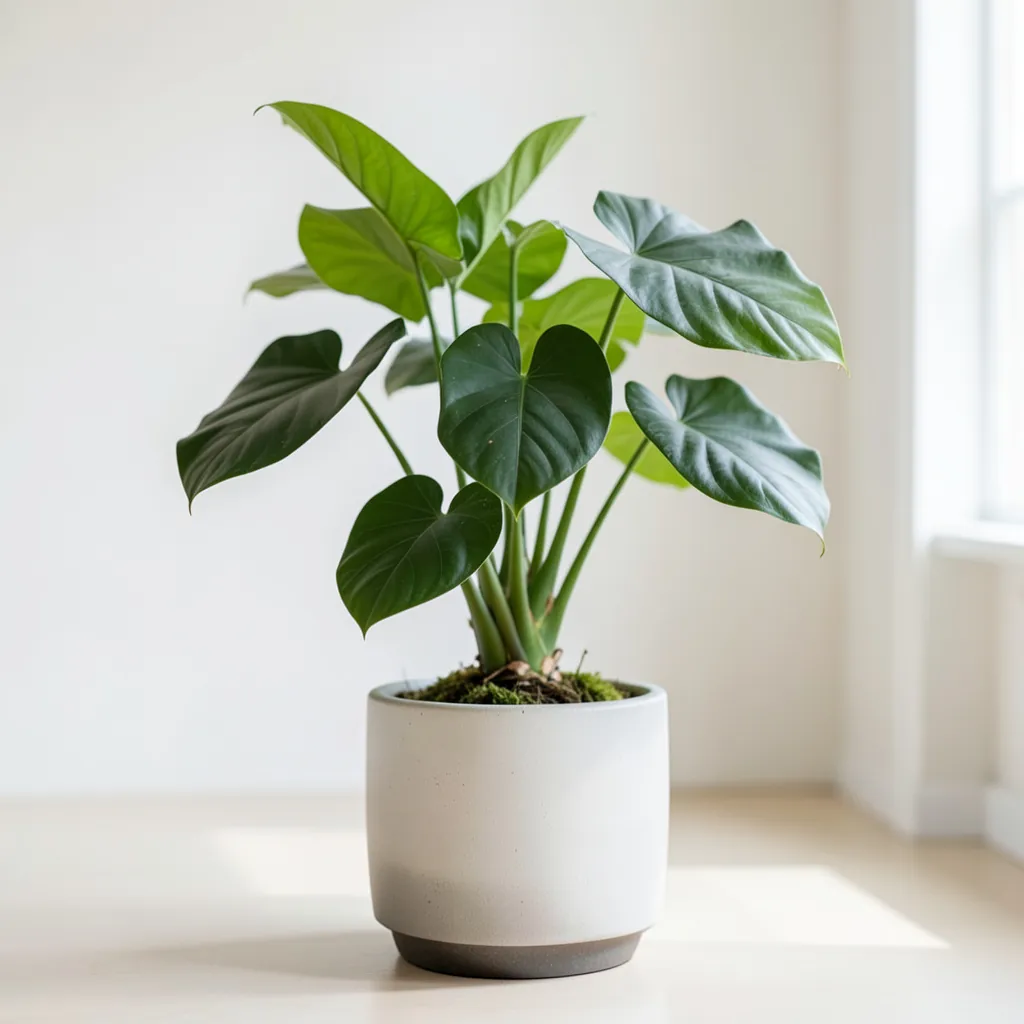
🪴 Elephant ears (Caladium, Colocasia, and Alocasia) are tropical houseplants prized for their dramatic, arrowhead-shaped leaves that resemble elephant ears. They’re popular for adding bold foliage and a tropical vibe to indoor spaces, though they require specific care to thrive.
Light: Bright indirect
Water: When top inch of soil is dry
Humidity: High (50-70%)
Temperature: 65-80°F (18-27°C)
Soil: Well-draining, peat-based
Difficulty: Moderate
Toxicity: Toxic to cats and dogs
Mature Size: 1-3 ft indoors
Light
What light do elephant ears need indoors?
These plants thrive in bright, indirect light (east or north-facing windows ideal). Direct sunlight scorches leaves, while too little light causes small, pale leaves. Rotate your plant weekly for even growth.
Watering
How often should I water elephant ears?
Water when the top 1-2 inches of soil dry out (typically weekly in summer, less in winter). Signs of trouble:
- Overwatering: Yellow leaves, mushy stems
- Underwatering: Drooping leaves, crispy edges
Reduce watering during dormancy (winter months).
Humidity and Temperature
Can elephant ears survive low humidity?
No - they need 50-70% humidity. Use a pebble tray or humidifier. Maintain 65-80°F temperatures and avoid drafts. Conflicting advice: Some sources suggest 60°F minimum, while others state 45°F overwintering temps for dormant tubers.
Soil and Fertilizer
Best soil mix for elephant ears?
Use equal parts:
- Peat moss
- Perlite or sand
- Potting soil
Fertilize monthly in growing season with half-strength 20-20-20 liquid fertilizer.
Repotting
When and how to repot elephant ears?
- Repot annually in spring using the soil mix above
- Choose a pot 2-4 inches wider than current
- Plant tubers 2-5cm deep (conflict: some say 5cm, others suggest shallower planting)
Propagation
How to propagate elephant ears?
- Divide tubers in spring before growth starts
- Each division needs at least one growth point
- Plant as you would a mature tuber
🩺 Common Problems
| Symptom | Likely Cause | Solution |
|---|---|---|
| Yellow leaves | Overwatering | Improve drainage |
| Brown tips | Low humidity | Increase moisture |
| Drooping | Underwatering | Soak dry soil thoroughly |
| No new growth | Dormancy or cold temps | Wait for spring |
🐾 Pet Safety and Toxicity
All elephant ear varieties contain calcium oxalate crystals, toxic to cats and dogs when ingested. Symptoms include oral irritation, drooling, and vomiting. Keep out of reach or choose pet-safe alternatives.
💡 Care Tips
- Mist leaves regularly to boost humidity
- Wipe leaves monthly to prevent dust buildup
- Reduce water in winter when dormant
- Avoid temperature fluctuations
❓ FAQ
Q: Are elephant ears toxic to pets?
Yes - toxic to both cats and dogs if ingested.
Q: Why are my elephant ear leaves turning yellow?
Usually from overwatering - let soil dry more between waterings.
Q: How fast do elephant ears grow?
Reaches full size in 1-2 growing seasons with proper care.
Q: Can elephant ears grow in low light?
No - they require bright indirect light to thrive.
Related guides
- How to Care for Alocasia: A Complete Guide
- Areca Palm Care Guide
- Best Plants for Bathrooms: Top Picks for High Humidity
- bird of paradise care guide
- Bird of Paradise Plant Care: Complete Indoor Growing Guide