Elephant Ear Plant Care: Complete Indoor Growing Guide
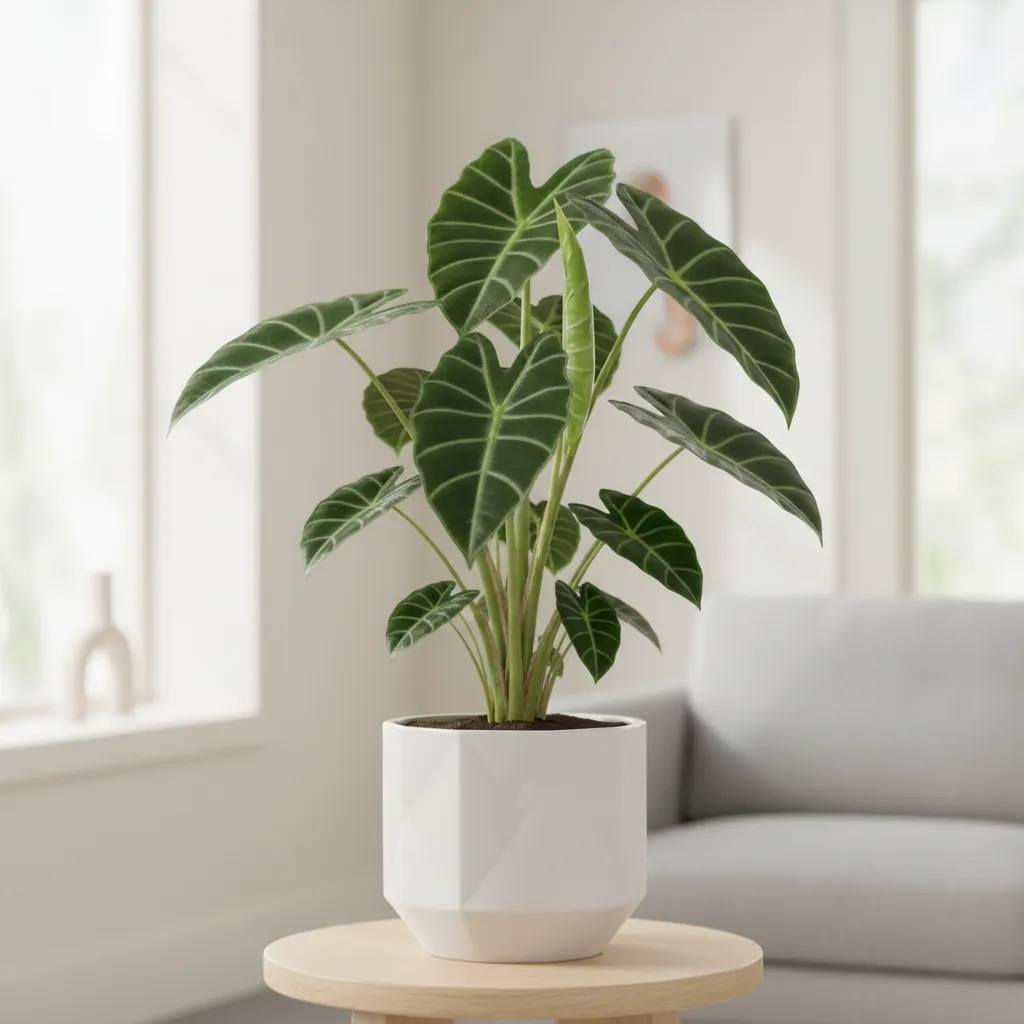
Elephant Ear Plant Care: Complete Indoor Growing Guide
Contents
- Quick Care Summary
- How Much Light Do Elephant Ear Plants Need?
- Watering Elephant Ears Correctly
- Soil & Repotting Needs
- Propagating Elephant Ear Plants
- Common Problems & Solutions
- Elephant Ear Care FAQs
Elephant ear plants (Caladium and Colocasia species) are prized for their large, dramatic foliage resembling elephant ears. Popular for their tropical appearance and variety of leaf colors (white, purple, red, or green with contrasting veins), they thrive as indoor plants with proper light, humidity, and moisture management.
Quick Care Summary
- Light: Partial to full shade (indirect light only, no direct sun)
- Water: Keep soil moist but not soggy; reduce water in winter dormancy
- Humidity: High (60-80%), use pebble trays or humidifiers
- Temperature: 60-80°F (18-27°C); avoid drafts
- Soil: Loamy, well-draining, rich in organic matter (pH 5.5–7.0)
- Toxicity: Toxic to humans and pets if ingested; skin/eye irritant
How Much Light Do Elephant Ear Plants Need?
Elephant ears require indirect bright light (east- or north-facing windows ideal). Direct sun scorches leaves. In low-light conditions, growth slows and leaf colors fade. Rotate plants monthly for even growth.
Watering Elephant Ears Correctly
- Frequency: Water when top 1–2 inches of soil feel dry (1–2x/week in summer, less in winter).
- Signs of overwatering: Yellow leaves, root rot, water dripping from leaf tips (“guttation”).
- Signs of underwatering: Wilting, crispy leaf edges.
Soil & Repotting Needs
- Soil mix: 2 parts potting soil, 1 part perlite/coir, 1 part compost for moisture retention and drainage.
- Repotting: Every 1–2 years in spring; choose a pot 2–4 inches wider than the tuber.
- Tuber planting: Bury 5cm deep with pointed end up; keep at 20°C (68°F) to break dormancy.
Propagating Elephant Ear Plants
- Division: In early spring, separate tubers with a sterile knife (each must have a growth node).
- Planting: Replant divisions immediately in fresh soil.
- Aftercare: Water sparingly until new growth appears.
Common Problems & Solutions
| Issue | Cause | Fix |
|---|---|---|
| Yellow leaves | Overwatering or poor drainage | Let soil dry; repot with drainage holes |
| Brown edges | Low humidity | Mist leaves or use a humidifier |
| Pests (rare) | Spider mites/aphids | Wipe with soapy water or neem oil |
| Wilting | Underwatering/heat stress | Water deeply; move to cooler spot |
Elephant Ear Care FAQs
Are elephant ears easy to grow indoors?
Yes, with consistent moisture, humidity, and indirect light. They grow 0.5–1m tall in containers.
Why are my elephant ear’s leaves drooping?
Underwatering is most likely. Check soil moisture and increase humidity. Overwatering can also cause root rot-induced drooping.
Should I mist my elephant ear plant?
Misting helps humidity but isn’t enough alone. Use pebble trays or a humidifier for consistent moisture.
Do elephant ears go dormant?
Yes. In autumn, leaves die back naturally. Store tubers dry at 50–60°F (10–15°C) until spring, then restart growth.
Can I grow elephant ears from cuttings?
No—propagate only by tuber division. Leaf cuttings won’t root.
Related guides
- How to Care for Alocasia: A Complete Guide
- Areca Palm Care Guide
- Best Plants for Bathrooms: Top Picks for High Humidity
- bird of paradise care guide
- Bird of Paradise Plant Care: Complete Indoor Growing Guide