Dieffenbachia Care: A Complete Guide to Growing Dumb Cane
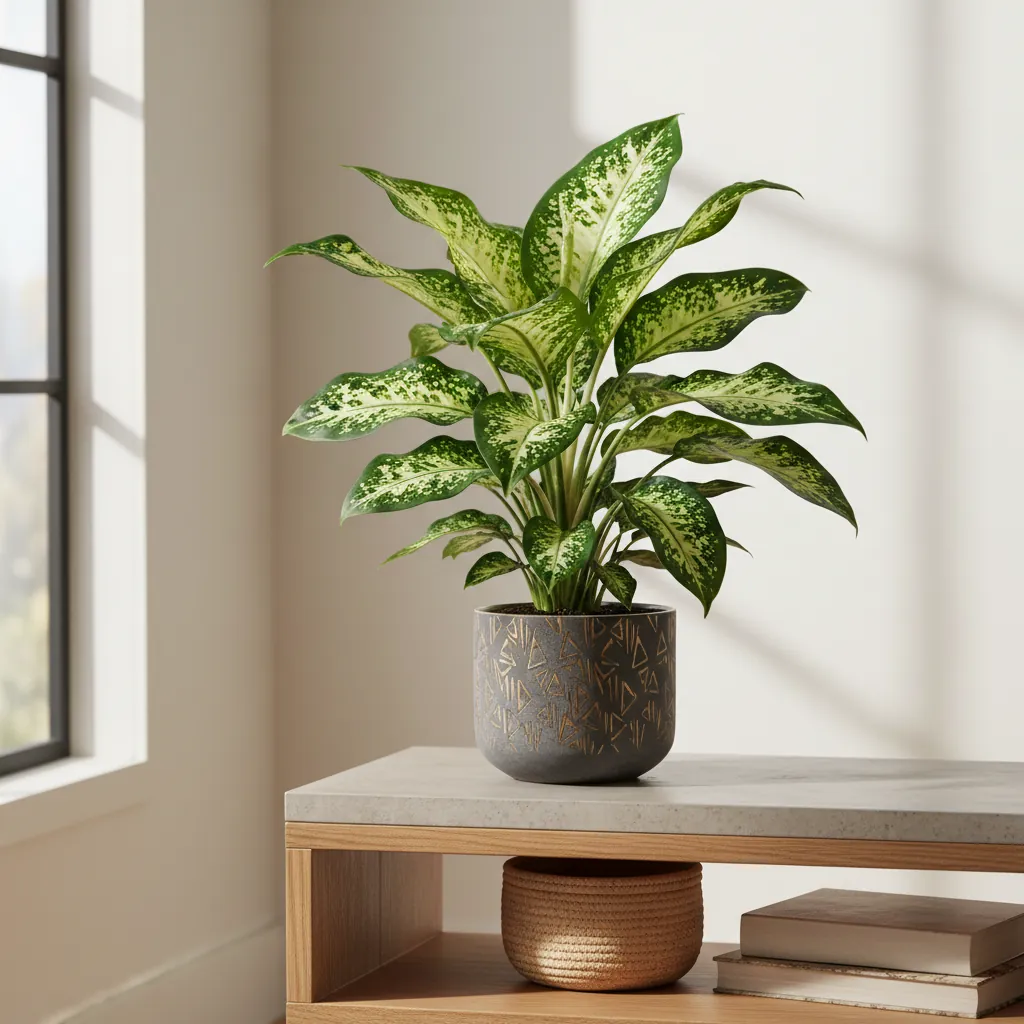
Dieffenbachia Care: A Complete Guide to Growing Dumb Cane
Contents
- Quick Care Summary
- How Often Should I Water My Dieffenbachia?
- What’s the Best Light and Placement for Dieffenbachia?
- Soil and Repotting Guidelines
- How to Propagate Dieffenbachia
- Common Dieffenbachia Problems and Solutions
- Dieffenbachia FAQ
Dieffenbachia (Dumb Cane) is a popular tropical houseplant known for its striking variegated foliage with patterns of green, white, and yellow. It thrives indoors with minimal care, tolerating imperfect conditions, though its sap is toxic to pets and humans.
Quick Care Summary
- Light: Bright, indirect light (tolerates low light but grows slower)
- Water: When top 2 inches of soil are dry (~2x/week in summer, less in winter)
- Humidity: Prefers moderate humidity (40-60%); mist leaves or use pebble tray
- Temperature: 65-75°F (avoid drafts below 55°F)
- Soil: Well-draining mix (e.g., tropical potting mix with perlite/lava rock)
- Toxicity: Highly toxic to pets and humans if ingested
How Often Should I Water My Dieffenbachia?
Water when 50-75% of the soil is dry. Check by inserting a finger 2” deep. Soak thoroughly until water drains from the pot’s base, then empty the saucer to prevent root rot. Reduce watering in winter when growth slows. Signs of overwatering: yellow leaves, mushy stems. Underwatering: droopy leaves, brown edges.
What’s the Best Light and Placement for Dieffenbachia?
- Ideal: East/north-facing window with filtered light
- Tolerates: Fluorescent office light or low light (growth may slow)
- Avoid: Direct sun (causes leaf scorch)
Rotate the plant weekly to prevent leaning. Leggy stems indicate insufficient light.
Soil and Repotting Guidelines
- Potting Mix: Use lightweight tropical soil (e.g., Miracle-Gro Tropical Mix) with added perlite for drainage.
- When to Repot: Every 1-2 years when roots circle the pot or growth stalls.
- Steps:
- Choose a pot 1-2” wider than the root ball.
- Fill bottom with soil, place plant, and fill gaps.
- Water thoroughly and return to original spot.
How to Propagate Dieffenbachia
Propagate via stem cuttings (wear gloves – sap irritates skin):
- Cut a 4-6” stem section with 2-3 leaves.
- Place in water or moist soil.
- Roots form in 3-4 weeks. Transplant once 2” long.
Common Dieffenbachia Problems and Solutions
| Symptom | Likely Cause | Fix |
|---|---|---|
| Yellow leaves | Overwatering/low light | Check soil moisture; move to brighter spot |
| Brown leaf tips | Low humidity/dry soil | Mist leaves; water more consistently |
| Leggy growth | Insufficient light | Prune back stems; relocate to brighter area |
| Drooping | Underwatering/cold drafts | Water if dry; keep temps above 65°F |
| Pests (mealybugs, spider mites) | Infestation | Wipe leaves with soapy water; use neem oil or insecticidal soap |
Dieffenbachia FAQ
Q: Is dieffenbachia pet-safe?
A: No. All parts contain calcium oxalate crystals, causing swelling/vomiting if ingested. Keep away from pets/kids.
Q: Why are my dieffenbachia’s leaves turning yellow?
A: Usually overwatering or poor drainage. Let soil dry between waterings and ensure pots drain well.
Q: How fast does dieffenbachia grow?
A: In ideal conditions, it grows 1-2 feet per year. Growth slows in low light.
Q: Can I put dieffenbachia outside?
A: Only in USDA zones 10-12 (temps above 60°F). Avoid direct sun and heavy rain.
Q: Should I fertilize my dieffenbachia?
A: Yes. Use diluted 20-20-20 fertilizer monthly in spring/summer. Avoid fertilizing in winter.
Related guides
- Areca Palm Care Guide
- Bird of Paradise Plant Care: Complete Indoor Growing Guide
- Boston Fern Care Guide: How to Keep Your Fern Thriving
- Bromeliad Care Guide: How to Grow and Maintain Indoor Bromeliads
- Calathea Care Guide: How to Keep Your Prayer Plant Thriving