Bromeliad Care Guide: How to Grow and Maintain Indoor Bromeliads
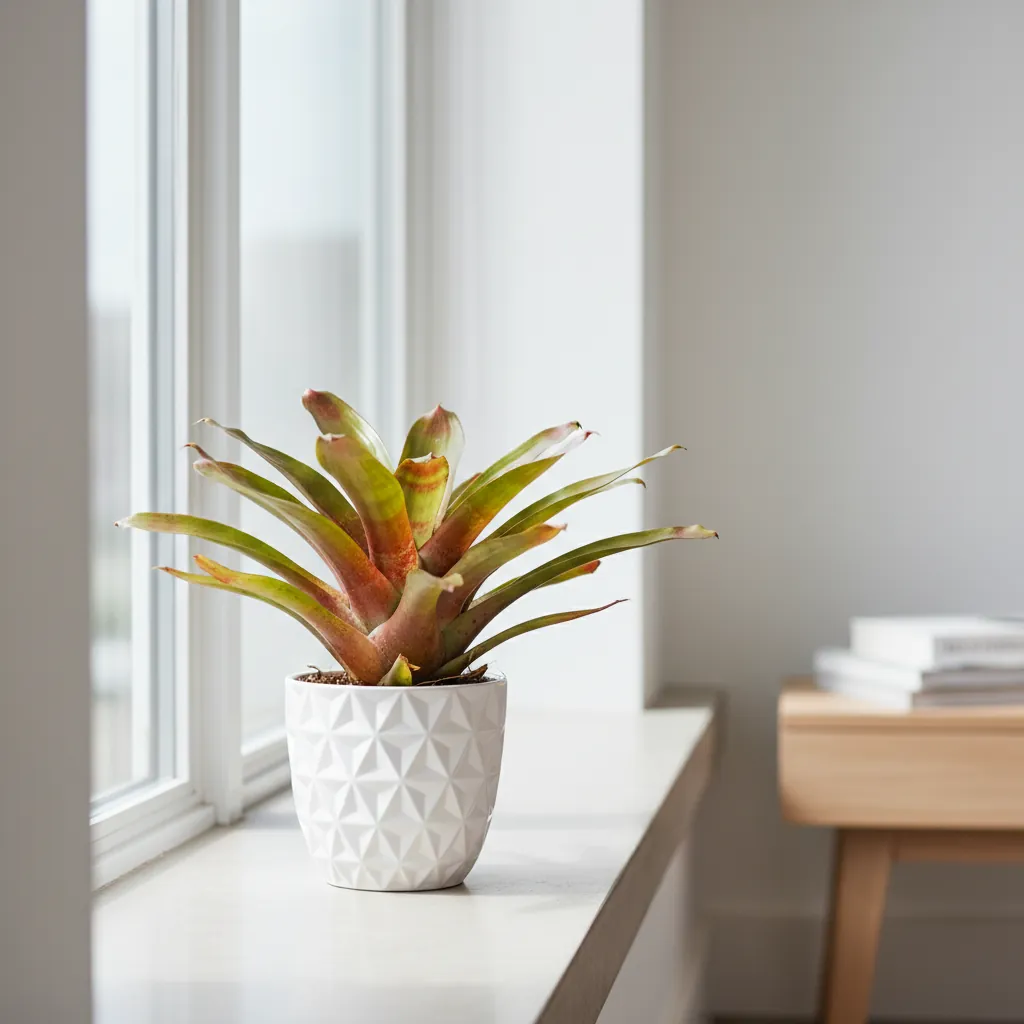
Bromeliad Care Guide: How to Grow and Maintain Indoor Bromeliads
Contents
- Quick Care Summary
- How Often Should I Water My Bromeliad?
- What Light and Placement Do Bromeliads Need?
- What Soil and Repotting Does a Bromeliad Need?
- How Do I Propagate Bromeliads?
- What Are Common Bromeliad Problems?
Bromeliads are tropical houseplants known for their vibrant, long-lasting blooms and unique rosette-shaped leaves. They are popular for their low-maintenance care, adaptability to indoor conditions, and ability to purify the air. While they bloom only once in their lifetime, they produce “pups” that can be propagated to grow new plants.
Quick Care Summary
- Light: Medium to bright indirect light.
- Water: Fill the central “cup” weekly and empty it to prevent stagnation. Water soil sparingly.
- Humidity: Moderate to high (40-60%).
- Temperature: 60-80°F (15-27°C).
- Soil: Well-draining mix (e.g., cactus soil or bark with peat moss).
- Toxicity: Pet-safe (non-toxic to cats and dogs).
How Often Should I Water My Bromeliad?
Water bromeliads by filling the central “cup” formed by their rosette leaves weekly. Empty and refill it to prevent debris buildup and rot. Water the soil sparingly, allowing the top half to dry out between waterings. Overwatering the soil can lead to root rot.
What Light and Placement Do Bromeliads Need?
Bromeliads thrive in medium to bright indirect light. Avoid direct sunlight, which can scorch their leaves. They can tolerate lower light conditions, but their blooms may lose vibrancy. Place them near east or north-facing windows for optimal light.
What Soil and Repotting Does a Bromeliad Need?
Bromeliads require well-draining soil to prevent root rot. Use a mix of cactus soil or equal parts peat moss and bark/perlite. Repot only when the plant becomes root-bound or after separating pups from the mother plant.
How Do I Propagate Bromeliads?
Bromeliads produce pups (offsets) near the base of the mother plant after blooming. When pups are one-third to half the size of the mother plant, carefully detach them with a sharp knife and plant them in well-draining soil. It may take up to a year for pups to bloom.
What Are Common Bromeliad Problems?
- Yellow Leaves: Often caused by overwatering or poor drainage. Check soil moisture and ensure proper drainage.
- Brown Tips: Indicate low humidity. Mist the plant weekly or use a humidifier.
- Pests: Spider mites or mealybugs can infest bromeliads. Treat with insecticidal soap or neem oil.
- Root Rot: Caused by overwatering. Allow soil to dry between waterings and ensure proper drainage.
FAQ
1. How long do bromeliad blooms last?
Bromeliad blooms last 6 months to a year, depending on the species and conditions.
2. Can bromeliads grow in low light?
Yes, but they thrive best in medium to bright indirect light. Low light may reduce bloom vibrancy.
3. Are bromeliads toxic to pets?
No, bromeliads are pet-safe and non-toxic to cats and dogs.
4. Why is my bromeliad’s central cup turning brown?
This is normal as the bloom fades. Empty the cup regularly to prevent rot and ensure the plant continues to thrive.
5. How do I encourage my bromeliad pup to bloom?
Provide bright indirect light, proper watering, and patience. It may take up to a year for pups to mature and bloom.
Related guides
- Bird of Paradise Plant Care: Complete Indoor Growing Guide
- Boston Fern Care Guide: How to Keep Your Fern Thriving
- Calathea Care Guide: How to Keep Your Prayer Plant Thriving
- Croton Plant Care: A Complete Guide
- Dracaena Care Guide: How to Grow This Popular Tropical Houseplant