Boston Fern Care Guide: How to Keep Your Fern Thriving
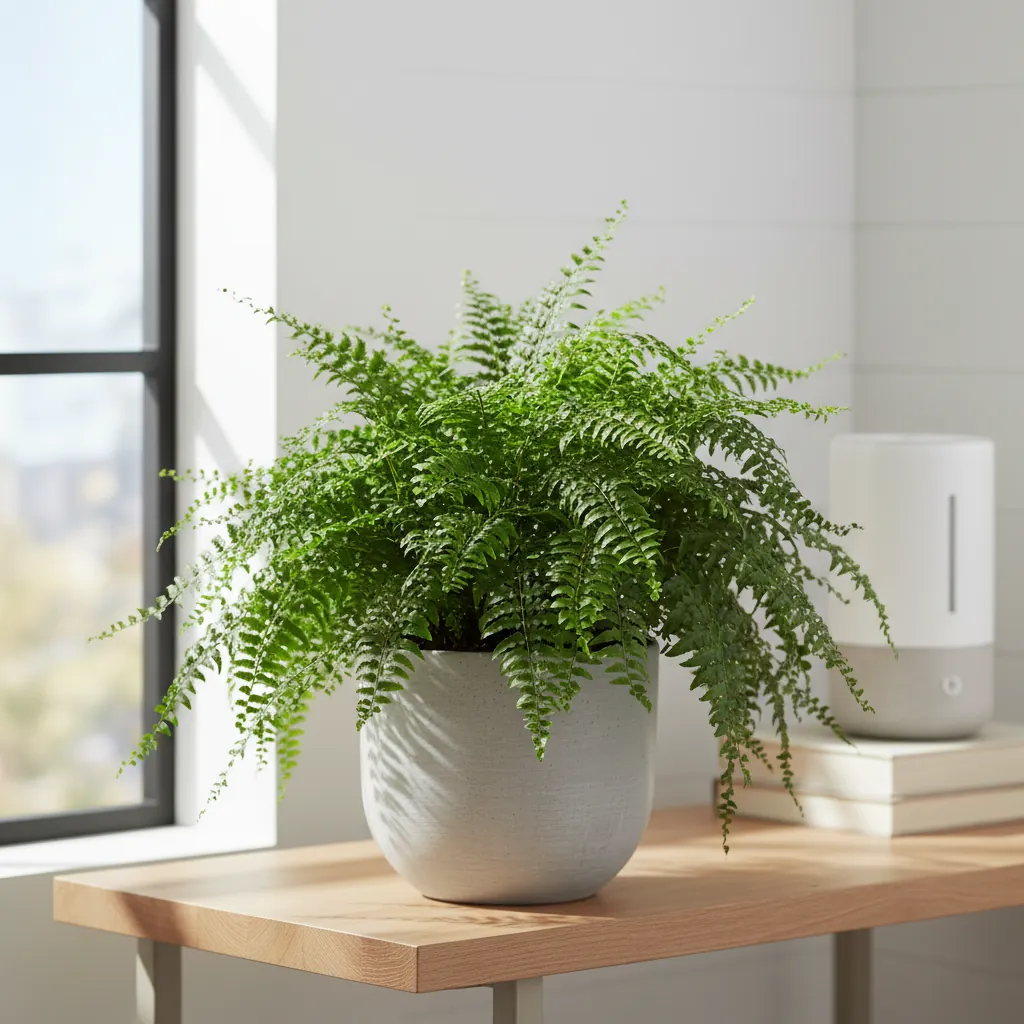
Boston Fern Care Guide: How to Keep Your Fern Thriving
Contents
- Quick Care Summary
- How Often Should I Water My Boston Fern?
- What’s the Best Light for a Boston Fern?
- How Do I Repot and Choose Soil for My Boston Fern?
- How Can I Increase Humidity for My Fern?
- How Do I Propagate a Boston Fern?
- Common Boston Fern Problems and Solutions
Boston ferns (Nephrolepis exaltata) are popular indoor plants known for their lush, feathery fronds and air-purifying qualities. Native to tropical forests, they thrive in humid environments with indirect light, making them ideal for bathrooms or shaded indoor spaces. Pet-friendly and relatively low-maintenance, they add a vibrant touch to any room when given proper care.
Quick Care Summary
- Light: Bright, indirect light (avoid direct sun)
- Water: Keep soil consistently moist; water when top inch feels dry
- Humidity: 50–80% (mist regularly or use a pebble tray)
- Temperature: 60–75°F (15–24°C); avoid cold drafts
- Soil: Well-draining, peat-based mix
- Toxicity: Pet-safe (non-toxic to cats and dogs)
How Often Should I Water My Boston Fern?
Water when the top inch of soil feels dry, typically 1–2 times per week in warmer months and every 10–14 days in winter. Ensure drainage to prevent root rot. Sources vary slightly:
- Source 1: Water “when the soil surface feels dry”
- Source 4: Recommends watering weekly
- Source 5: Suggests 4–5 cups twice weekly in summer, halved in winter
What’s the Best Light for a Boston Fern?
Place in bright, indirect light (e.g., near an east-facing window). Avoid direct sun, which scorches leaves. Outdoors, keep in full shade (Source 5). Rotate the plant monthly for even growth.
How Do I Repot and Choose Soil for My Boston Fern?
Repot every 1–2 years in spring using:
- Soil: Peat-based mix with perlite or orchid bark for drainage (Sources 1, 3)
- Pot: 1–2 inches larger than the root ball, with drainage holes
How Can I Increase Humidity for My Fern?
- Mist leaves 2–4 times daily (Source 5)
- Use a pebble tray or humidifier
- Group with other plants (Source 3)
- Ideal humidity: 60–80% (Source 5)
How Do I Propagate a Boston Fern?
Divide the plant during repotting:
- Gently separate root clumps with sterile shears
- Ensure each division has roots and fronds
- Plant in fresh soil and water thoroughly (Sources 1, 3)
Common Boston Fern Problems and Solutions
| Issue | Cause | Fix |
|---|---|---|
| Yellow leaves | Underwatering/low humidity | Increase misting; water more frequently |
| Brown tips | Dry air/chemicals in water | Use distilled water; boost humidity |
| Dropping fronds | Overwatering/cold drafts | Check soil drainage; keep temps above 60°F |
| Pests (spider mites, mealybugs) | Low humidity | Wipe leaves; use insecticidal soap (Source 3) |
FAQ
Can Boston ferns survive in low light?
They tolerate lower light but grow best in bright, indirect light. Fronds may thin in dim conditions.
Why are my fern’s leaves turning brown?
Usually due to dry air, tap water minerals, or over-fertilizing. Mist regularly and use filtered water.
Can I put my Boston fern outside in summer?
Yes! Move to a shaded spot after frost danger passes. Acclimate gradually to avoid shock (Source 5).
How often should I fertilize?
Monthly in spring/summer with half-strength balanced fertilizer (Sources 1, 3). Avoid winter feeding.
Do Boston ferns purify air?
Yes—they remove formaldehyde and xylene (Source 2).
Related guides
- Bird of Paradise Plant Care: Complete Indoor Growing Guide
- Calathea Care Guide: How to Keep Your Prayer Plant Thriving
- Monstera Care Guide
- Philodendron Care: A Complete Guide to Thriving Houseplants
- How to Care for Aloe Vera: A Complete Guide to Thriving Plants