Orchid Care: A Complete Guide to Thriving Indoor Plants
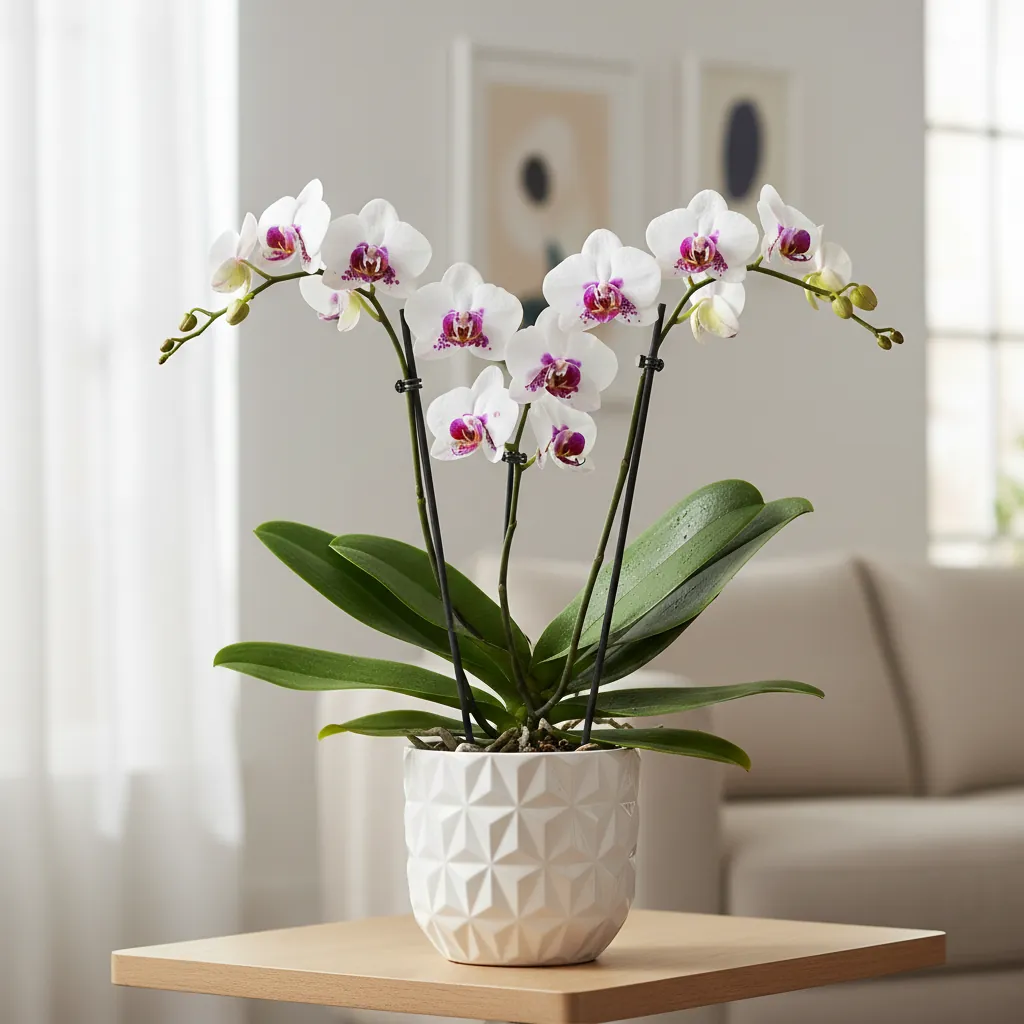
Orchid Care: A Complete Guide to Thriving Indoor Plants
Contents
- Quick Care Summary
- How Often Should I Water My Orchid?
- What’s the Best Light for Orchids?
- What Soil Should I Use for Orchids?
- How Do I Repot My Orchid?
- How Can I Propagate My Orchid?
- What Are Common Orchid Problems?
- FAQs About Orchid Care
Orchids are elegant, long-lasting flowering plants known for their beauty and variety. Popular for their ability to rebloom year after year, orchids like the Phalaenopsis (moth orchid) are ideal for indoor environments. Proper care involves balancing light, water, humidity, and temperature to mimic their natural tropical habitat.
Quick Care Summary
- Light: Bright, indirect light (east or west-facing windows).
- Water: Water thoroughly once a week; allow roots to dry slightly between waterings.
- Humidity: 40-70% humidity; use a humidity tray or humidifier if needed.
- Temperature: 65-75°F (18-24°C) during the day, with a 10°F drop at night.
- Soil: Well-draining orchid mix (bark, moss, or specialized orchid substrate).
- Toxicity: Non-toxic to pets.
How Often Should I Water My Orchid?
Water your orchid once a week, ensuring the roots dry slightly between waterings. Overwatering is the most common cause of orchid failure, leading to root rot. Use tepid water and water early in the day so the plant dries by nightfall. Check the roots: green means hydrated, silvery means dry.
What’s the Best Light for Orchids?
Orchids thrive in bright, indirect light. East or west-facing windows are ideal, as they provide gentle morning or afternoon sun without the intensity of midday rays. Direct sunlight can scorch leaves, while insufficient light prevents blooming. If natural light is limited, supplement with a full-spectrum LED grow light.
What Soil Should I Use for Orchids?
Orchids require a well-draining substrate like bark, moss, or a specialized orchid mix. Unlike traditional houseplants, orchids grow in porous media that allow air circulation around the roots. Avoid using regular potting soil, as it retains too much moisture and can lead to root rot.
How Do I Repot My Orchid?
Repot your orchid every 1-2 years or when the roots outgrow the pot and the medium breaks down. Choose a pot one size larger and use fresh orchid mix. Carefully remove the orchid, trim dead roots, and place it in the new pot. Water sparingly until the plant adjusts.
How Can I Propagate My Orchid?
Orchids can be propagated through keikis (baby plants) or division. Keikis often grow on flower spikes or nodes and can be removed once they develop roots. For division, separate the orchid into smaller sections, ensuring each has healthy roots and leaves. Repot each section individually.
What Are Common Orchid Problems?
- Yellow Leaves: Caused by overwatering, insufficient light, or nutrient deficiency.
- Root Rot: Result of prolonged exposure to standing water; trim affected roots and repot.
- Pests: Scale, aphids, and spider mites can infest orchids. Remove pests with a soft cloth or insecticidal soap.
- Bud Drop: Often due to sudden temperature changes, drafts, or inconsistent watering.
FAQs About Orchid Care
Can Orchids Grow in Low Light?
Some orchids, like Phalaenopsis and Paphiopedilum, thrive in low light, but most require bright, indirect light to bloom.
How Do I Get My Orchid to Rebloom?
Ensure proper light, temperature, and watering. After blooms fall, cut the flower spike above a node and fertilize monthly.
Are Orchids Safe for Pets?
Yes, orchids are non-toxic to cats and dogs.
Why Are My Orchid’s Roots Growing Out of the Pot?
This is natural; orchid roots seek air and moisture. Repot only when the medium breaks down or the plant becomes overcrowded.
How Long Do Orchid Blooms Last?
Blooms typically last 8-12 weeks for Phalaenopsis and 3-5 weeks for Vandas and Dendrobiums.
Related guides
- Peace Lily Care: A Complete Guide to Keeping Your Spathiphyllum Thriving
- How to Care for Aloe Vera: A Complete Guide to Thriving Plants
- Bird of Paradise Plant Care: Complete Indoor Growing Guide
- Boston Fern Care Guide: How to Keep Your Fern Thriving
- Calathea Care Guide: How to Keep Your Prayer Plant Thriving