Haworthia Care Guide
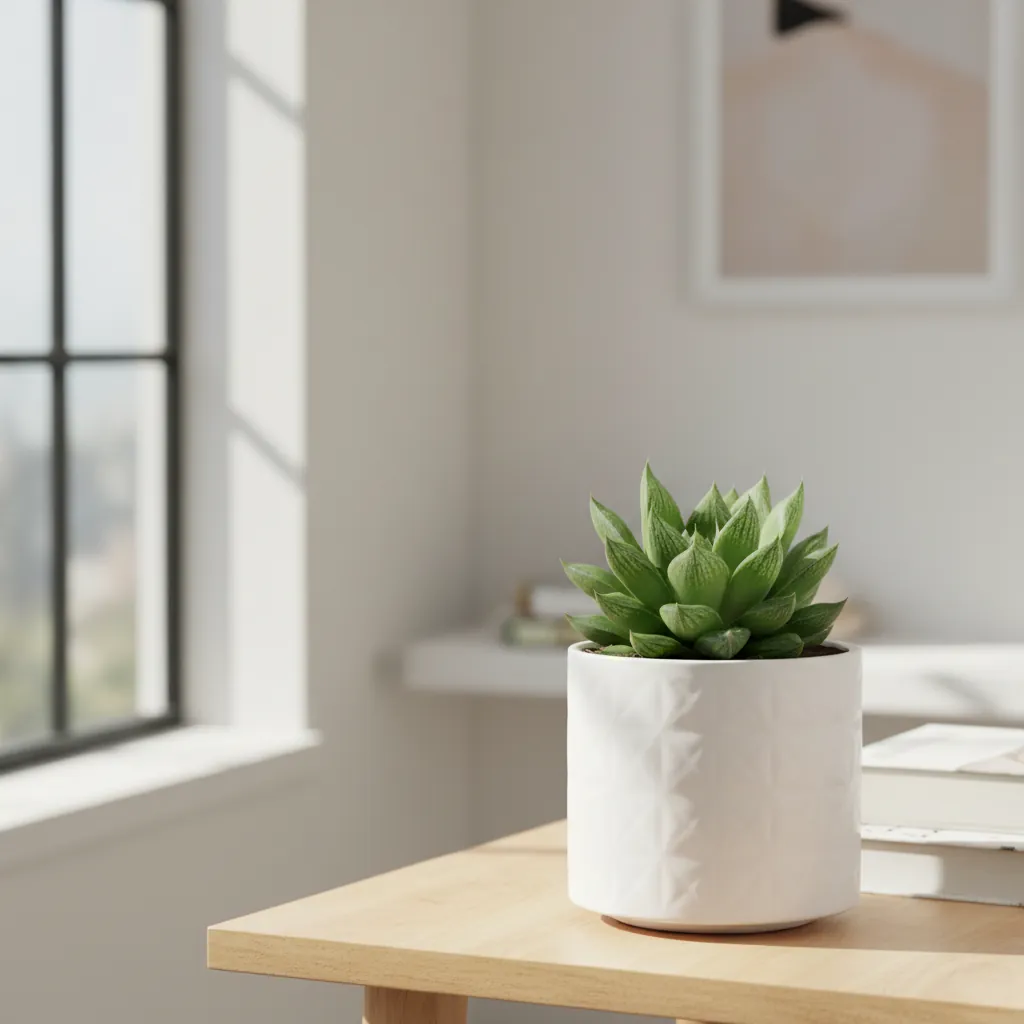
Haworthia Care Guide
Contents
- Quick Care Summary
- How Often Should I Water My Haworthia?
- What Is the Best Light for Haworthia?
- How Do I Repot Haworthia?
- Can I Propagate Haworthia?
- What Are Common Problems with Haworthia?
Haworthia is a popular succulent houseplant known for its compact rosettes of striped or speckled leaves. Native to dry regions of South Africa, it is prized for its low-maintenance care, attractive appearance, and pet-friendly nature, making it a favorite among indoor plant enthusiasts.
Quick Care Summary
- Light: Bright, indirect light; avoid harsh midday sun.
- Water: Water sparingly; let soil dry completely between waterings.
- Humidity: Low to normal household humidity.
- Temperature: 10–26°C (50–80°F); protect from frost.
- Soil: Well-draining cactus or succulent mix.
- Toxicity: Non-toxic and safe for pets.
How Often Should I Water My Haworthia?
Haworthia prefers deep, infrequent watering. Water thoroughly until water drains from the pot, then wait until the soil is completely dry before watering again. Overwatering is the most common issue, leading to root rot. During winter dormancy, reduce watering to occasional light sips to prevent shriveling.
What Is the Best Light for Haworthia?
Place your Haworthia in bright, indirect light, such as an east- or west-facing window. Avoid direct midday sun, which can scorch the leaves. If leaves stretch or lose color, the plant may need more light. For artificial lighting, provide 12–14 hours daily.
How Do I Repot Haworthia?
Repot every 2–3 years using a well-draining cactus or succulent mix. Choose a pot slightly larger than the root system with drainage holes. Remove the plant, inspect roots, and trim any rotten parts. After repotting, wait a few days before watering to allow roots to heal.
Can I Propagate Haworthia?
Haworthia is easy to propagate via offsets. Separate offsets with roots during repotting, let the cut dry, and plant them in gritty soil. Some species can also propagate from leaf cuttings, but this method takes longer and requires careful handling to ensure success.
What Are Common Problems with Haworthia?
- Yellow leaves: Often caused by overwatering or root rot. Check soil moisture and drainage.
- Stretched leaves: Insufficient light; move to a brighter location.
- Pests: Mealybugs can hide between leaves or roots. Treat with insecticidal soap or alcohol.
- Leaf marks: Fluoride in tap water may cause damage; use rainwater or filtered water.
FAQ
Is Haworthia safe for pets?
Yes, Haworthia is non-toxic and safe for cats and dogs.
How fast does Haworthia grow?
Haworthia grows slowly, typically reaching a mature size of 8–15 cm (3–6 inches) over several years.
Why are my Haworthia’s leaves wrinkled?
Wrinkled leaves usually indicate dehydration. Water the plant thoroughly and ensure the soil drains properly.
Can Haworthia survive in low light?
While Haworthia can tolerate low light, it thrives in bright, indirect light. Insufficient light can cause etiolation (stretched leaves).
Should I fertilize my Haworthia?
Feed sparingly during active growth (spring and summer) with a diluted cactus fertilizer. Avoid fertilizing during dormancy.
Related guides
- How to Care for Aloe Vera: A Complete Guide to Thriving Plants
- Echeveria Care Guide
- How to Care for a Ponytail Palm (Beaucarnea recurvata)
- How to Care for String of Pearls Plants (Curio rowleyanus)
- How to Propagate Succulents: A Complete Care Guide