Venus Flytrap Care: How to Keep Your Carnivorous Plant Thriving
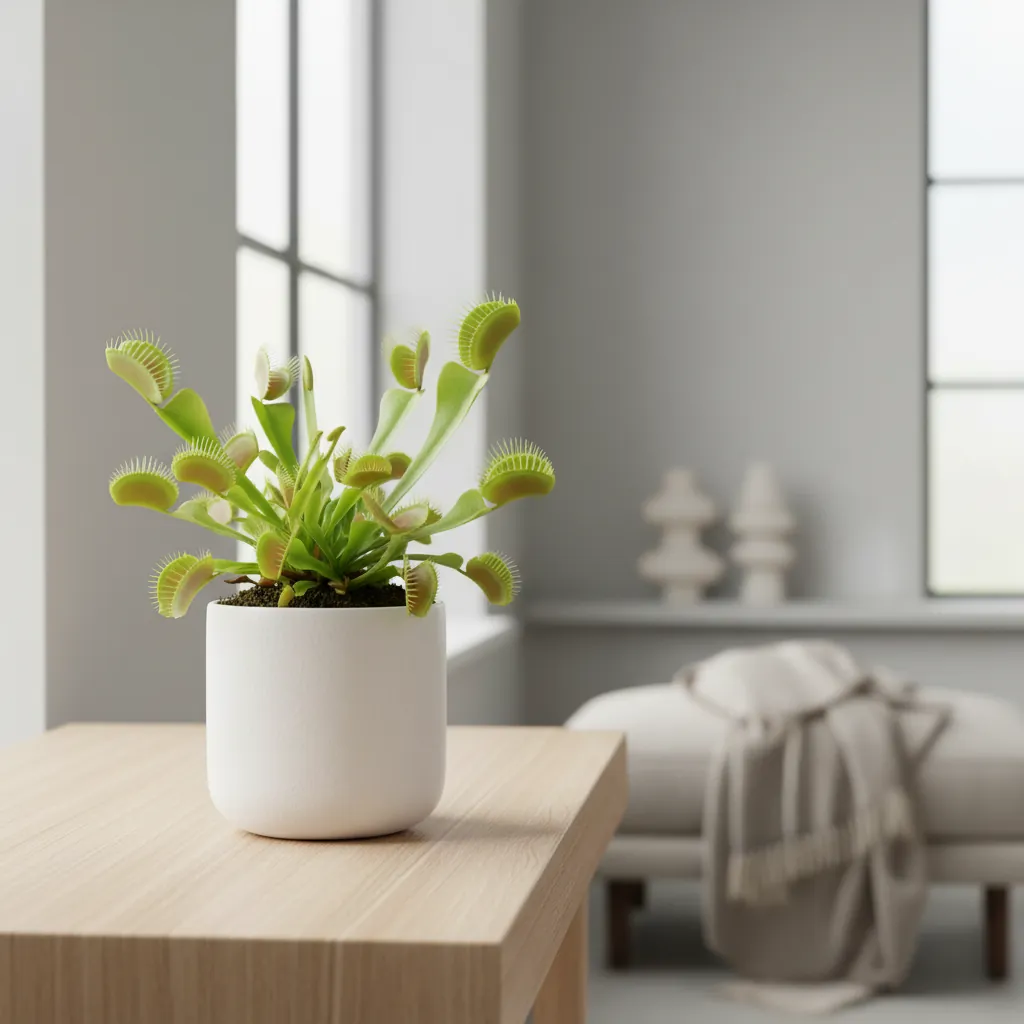
Venus Flytrap Care: How to Keep Your Carnivorous Plant Thriving
Contents
- Quick Care Summary
- How Often Should I Water My Venus Flytrap?
- Where Should I Place My Venus Flytrap for Optimal Light?
- What Soil Is Best, and When Should I Repot?
- How Do I Propagate a Venus Flytrap?
- Why Are My Venus Flytrap’s Traps Turning Black?
- Common Problems and Solutions
- Frequently Asked Questions
The Venus flytrap (Dionaea muscipula) is a captivating carnivorous plant known for its snap-shut traps that catch insects. Native to subtropical wetlands, it’s popular for its unique feeding behavior and striking appearance but requires specific care, including pure water, nutrient-poor soil, and a winter dormancy period.
Quick Care Summary
- Light: 4–6 hours of direct sunlight daily (full sun preferred)
- Water: Rainwater, distilled, or reverse-osmosis water; keep soil constantly moist
- Humidity: Moderate (50% or higher); avoid sealed terrariums
- Temperature: 10–27°C (50–80°F) in summer; 0–10°C (30–50°F) in winter dormancy
- Soil: Nutrient-poor mix (sphagnum moss, peat-free carnivorous compost, or sand/perlite blend)
- Toxicity: Non-toxic to pets/humans (but traps can harm small insects)
How Often Should I Water My Venus Flytrap?
Use only rainwater, distilled, or reverse-osmosis water—tap water kills it. Keep the pot in a saucer with 1cm water in spring/summer, reducing to 0.5cm in winter. Never let the soil dry out.
Where Should I Place My Venus Flytrap for Optimal Light?
Provide 4–6 hours of direct sunlight daily (e.g., a south-facing window). Insufficient light causes weak, green traps. Outdoors in full sun is ideal during growing seasons.
What Soil Is Best, and When Should I Repot?
Use a nutrient-poor mix:
- Live sphagnum moss
- Peat-free carnivorous compost
- Sand/perlite blend
Repot every 1–2 years in late winter/early spring. Avoid fertilizers—they get nutrients from insects.
How Do I Propagate a Venus Flytrap?
- Division: Separate clumps during dormancy (late winter).
- Leaf cuttings: Gently pull a leaf with its white base and lay on moist moss.
- Seeds: Sow on sphagnum moss; germination takes weeks (avoid garden soil).
Why Are My Venus Flytrap’s Traps Turning Black?
- Natural aging: Trim dead traps.
- Overstimulation: Triggering traps without feeding exhausts the plant.
- Winter dormancy: Expected dieback (reduce watering, keep cool).
Common Problems and Solutions
| Symptom | Cause | Fix |
|---|---|---|
| Weak, green traps | Insufficient light | Move to brighter location or use grow lights. |
| Moldy soil | Overwatering/stagnant air | Reduce water slightly; improve airflow. |
| Mineral buildup | Tap water use | Flush soil with distilled water; repot in fresh mix. |
| Traps not closing | Exhaustion or poor health | Ensure proper light/water; avoid triggering traps. |
Frequently Asked Questions
1. Can I Use Tap Water for My Venus Flytrap?
No. Minerals in tap water accumulate and kill the plant. Use only rainwater, distilled, or reverse-osmosis water.
2. Do Venus Flytraps Need to Eat Insects?
They can survive without insects but thrive with occasional live prey (e.g., flies, mealworms). Never feed dead bugs, meat, or human food—traps only digest moving prey.
3. Why Does My Plant Need Winter Dormancy?
Native to temperate bogs, flytraps require a cold rest (0–10°C/30–50°F) to reset their growth cycle. Without it, they weaken and die.
4. Are Venus Flytraps Hard to Keep Alive?
They’re low-maintenance if given:
- Pure water
- Full sun
- Poor soil
- Winter dormancy
5. Should I Cut Off Black Traps?
Yes—trim dead traps to redirect energy to new growth.
Related guides
- Air Plant Care Guide: How to Keep Your Tillandsia Thriving
- how do you care for venus fly traps
- How to Get Rid of Spider Mites on Houseplants
- Ponytail Palm Care Guide: Everything You Need to Know
- Pet-Friendly Houseplants: Safe Greenery for Cats and Dogs