Syngonium Care Guide
Syngonium Care Guide
Contents
- Quick Care Summary
- How Often Should I Water My Syngonium?
- What Light Conditions Are Best for Syngonium?
- What Soil Should I Use for Syngonium?
- How Do I Repot My Syngonium?
- How Can I Propagate My Syngonium?
- What Are Common Syngonium Problems?
- Frequently Asked Questions
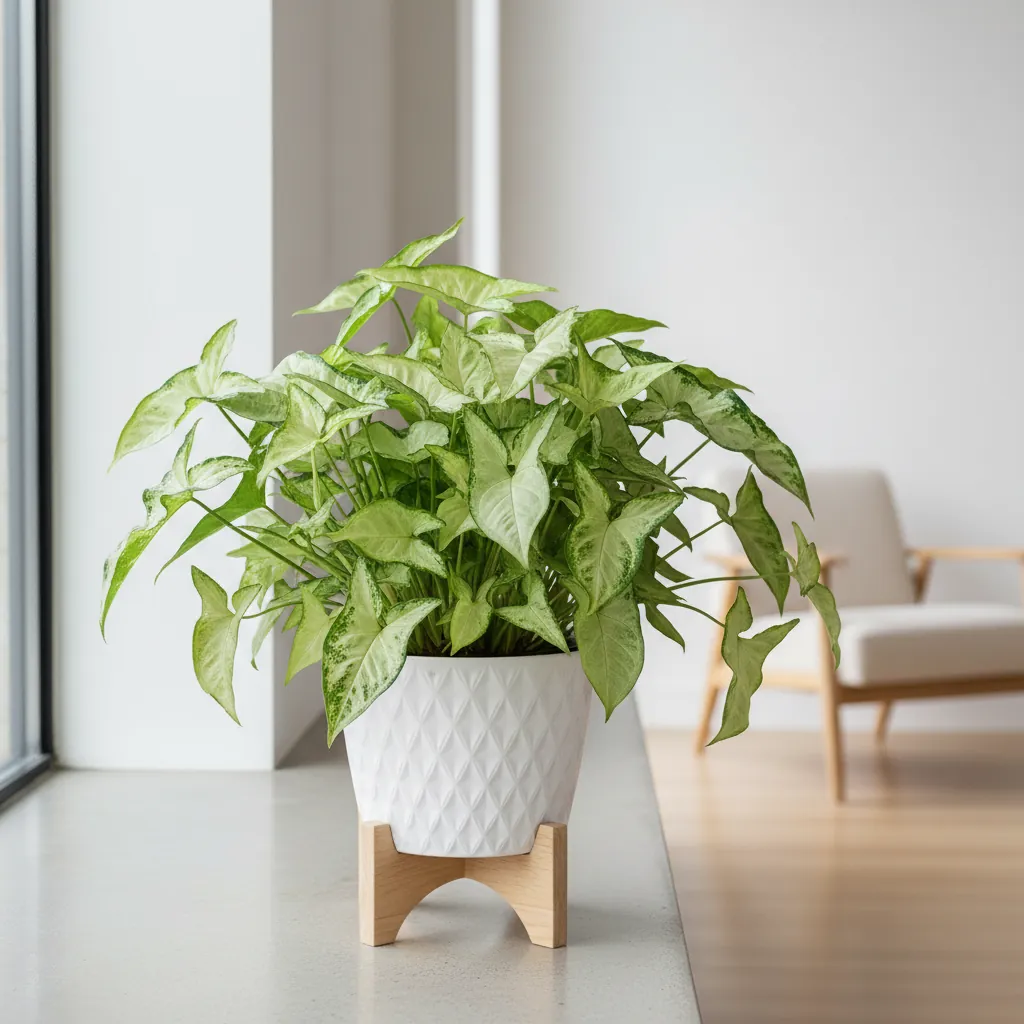
Syngonium, commonly known as the Arrowhead Plant, is a popular houseplant prized for its attractive foliage, ease of care, and adaptability. Its arrow-shaped leaves come in various colors, including green, white, and pink, making it a versatile addition to any indoor space.
Quick Care Summary
- Light: Bright, indirect light (tolerates low light but thrives in brighter conditions).
- Water: Keep soil moist but not waterlogged; water when the top inch of soil feels dry.
- Humidity: Prefers high humidity; mist regularly or use a humidifier.
- Temperature: Thrives in 60°F–85°F (15°C–29°C); avoid drafts.
- Soil: Well-draining, chunky mix (e.g., peat, perlite, orchid bark).
- Toxicity: Toxic to pets and humans if ingested due to calcium oxalate crystals.
How Often Should I Water My Syngonium?
Syngoniums prefer consistently moist soil but dislike being waterlogged. Water when the top inch of soil feels dry to the touch. During spring and summer, this typically means watering once a week. Reduce watering in winter, as growth slows. Overwatering can lead to root rot, while underwatering causes drooping and crispy leaves.
What Light Conditions Are Best for Syngonium?
Syngoniums thrive in bright, indirect light but can tolerate lower light levels. Avoid direct sunlight, as it can scorch the leaves. Variegated varieties (e.g., white or pink) require more light to maintain their vibrant colors. If natural light is insufficient, consider using a grow light.
What Soil Should I Use for Syngonium?
A well-draining, airy soil mix is essential. Combine equal parts potting soil with perlite, orchid bark, or pumice to ensure proper drainage and aeration. This mimics the plant’s natural epiphytic habitat and prevents root rot.
How Do I Repot My Syngonium?
Repot every 2-3 years or when the plant becomes root-bound. Choose a pot slightly larger than the current one. Spring is the best time for repotting. Gently remove the plant, loosen the roots, and place it in fresh, well-draining soil.
How Can I Propagate My Syngonium?
Syngoniums are easily propagated through stem cuttings or division:
- Stem Cuttings: Cut a healthy stem below a node (4-6 inches long). Place it in water or moist soil, ensuring the node is submerged. Roots will form in 2-3 weeks.
- Division: Separate the plant into smaller sections, ensuring each has roots and shoots. Pot each division in fresh soil.
What Are Common Syngonium Problems?
| Problem | Cause | Solution |
|---|---|---|
| Yellow leaves | Overwatering or poor drainage | Check soil drainage; reduce watering |
| Crispy leaves | Underwatering or low humidity | Water more often; increase humidity |
| Brown tips | Low humidity or dry air | Mist regularly or use a humidifier |
| Leggy growth | Insufficient light | Move to brighter, indirect light |
| Pests (e.g., spider mites, mealybugs) | Dry conditions or poor care | Use insecticidal soap; improve care |
Frequently Asked Questions
Is Syngonium toxic to pets?
Yes, Syngonium is toxic to pets and humans if ingested due to calcium oxalate crystals. Keep it out of reach of curious pets and children.
Can Syngonium grow in low light?
Syngonium can tolerate low light but won’t thrive. It prefers bright, indirect light for optimal growth and vibrant foliage.
How do I make my Syngonium bushier?
Regular pruning encourages bushier growth. Pinch back the tips of new growth and trim leggy stems.
Why are my Syngonium leaves turning yellow?
Yellow leaves are often a sign of overwatering or poor drainage. Ensure the soil dries slightly between waterings and use well-draining soil.
Related guides
- Aglaonema Care Guide: How to Grow Chinese Evergreen Indoors
- Bird’s Nest Fern Care Guide
- Chinese Evergreen Care Guide
- English Ivy Care Guide
- Fiddle Leaf Fig Care Guide