Spider Plant Care & Propagation Guide
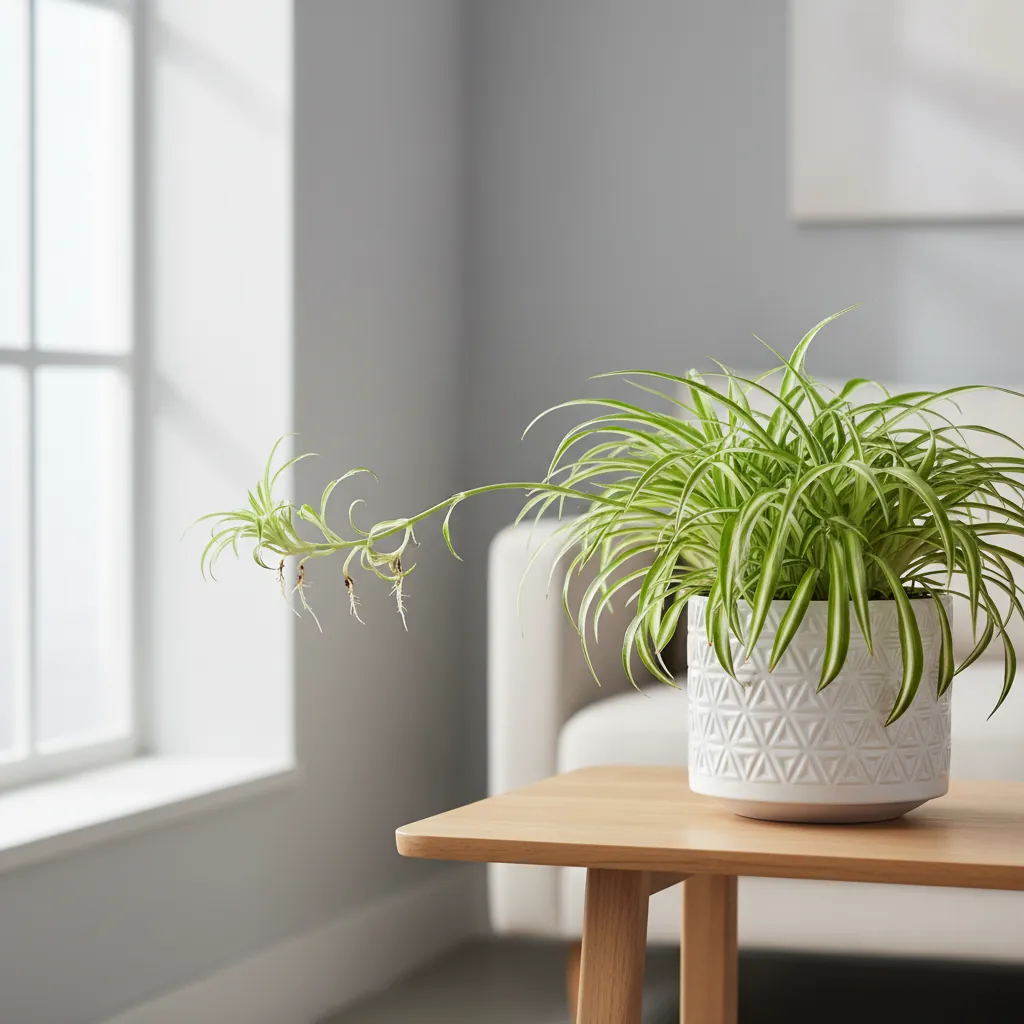
Spider Plant Care & Propagation Guide
Contents
- Quick Care Summary
- How Often Should I Water My Spider Plant?
- Where Should I Place My Spider Plant for Best Growth?
- What Soil Works Best for Spider Plants? When to Repot?
- How to Propagate Spider Plants: 3 Easy Methods
- How to Fix Common Spider Plant Problems
- Spider Plant FAQ
Spider plants (Chlorophytum comosum) are popular houseplants known for their arching, variegated leaves and easy-to-propagate “spiderettes.” These low-maintenance plants thrive in indirect light and produce abundant baby plants, making them perfect for beginners or gift-giving.
Quick Care Summary
- Light: Bright, indirect light (tolerates low light but grows slower)
- Water: When top inch of soil is dry; avoid soggy soil
- Humidity: Average household levels; mist if tips brown
- Temperature: 60–80°F (15–27°C)
- Soil: Well-draining potting mix
- Toxicity: Pet-safe (non-toxic to cats/dogs)
How Often Should I Water My Spider Plant?
Water when the top inch of soil feels dry, typically every 1–2 weeks. Reduce frequency in winter. Brown leaf tips often indicate fluoride in tap water—use filtered water if possible. Avoid overwatering, as it can cause root rot.
Where Should I Place My Spider Plant for Best Growth?
Spider plants thrive in bright, indirect light (east/north-facing windows). They tolerate low light but produce fewer spiderettes. Avoid direct sun, which scorches leaves. Ideal spots include hanging baskets, shelves, or tables where their trailing foliage can cascade.
What Soil Works Best for Spider Plants? When to Repot?
Use a well-draining potting mix (standard houseplant soil works). Repot every 1–2 years in spring if roots circle the pot. Choose a container 1–2 inches larger; spider plants like being slightly root-bound but stagnate if overly cramped.
How to Propagate Spider Plants: 3 Easy Methods
| Method | Steps | Time to Root | Best For |
|---|---|---|---|
| Water | 1. Cut baby with root nubs 2. Submerge base in water 3. Transplant after 2–3” roots | 1–2 weeks | Watching root growth |
| Soil | 1. Snip baby plantlet 2. Plant ½” deep in moist soil 3. Keep damp for 2–3 weeks | 3–4 weeks | Hands-off approach |
| Division | 1. Split root ball with knife 2. Replant sections with leaves/roots | Immediate | Overgrown parent plants |
Conflicting Advice: Sources debate ideal spiderette size for propagation—some recommend 2–3” babies with small root nubs, while others suggest waiting for 1” roots.
How to Fix Common Spider Plant Problems
- Brown tips: Use filtered water, increase humidity, or reduce fertilizer.
- Yellow leaves: Overwatering or low light; adjust watering and move to brighter spot.
- Pests (mealybugs/spider mites): Wipe leaves with soapy water or neem oil.
- Root rot: Repot in fresh soil, trim blackened roots, and reduce watering.
Spider Plant FAQ
Q: Why isn’t my spider plant producing babies?
A: Young plants (under 1–2 years) or insufficient light may delay spiderettes. Move to brighter indirect light and ensure proper watering.
Q: Can I leave spiderettes attached to the mother plant?
A: Yes! They’ll grow larger but may divert energy from the parent. For propagation, detach once roots are 0.5–1” long.
Q: How fast do spider plants grow?
A: In ideal conditions, they grow vigorously—up to 12” leaves in 6 months—and produce multiple spiderettes yearly.
Related guides
- Air Plant Care Guide: How to Keep Your Tillandsia Thriving
- Pet-Friendly Houseplants: Safe Greenery for Cats and Dogs
- Spider Plant Care Guide
- Aglaonema Care Guide: How to Grow Chinese Evergreen Indoors
- How to Care for Aloe Vera: A Complete Guide to Thriving Plants