Ponytail Palm Care Guide: How to Grow This Low-Maintenance Houseplant
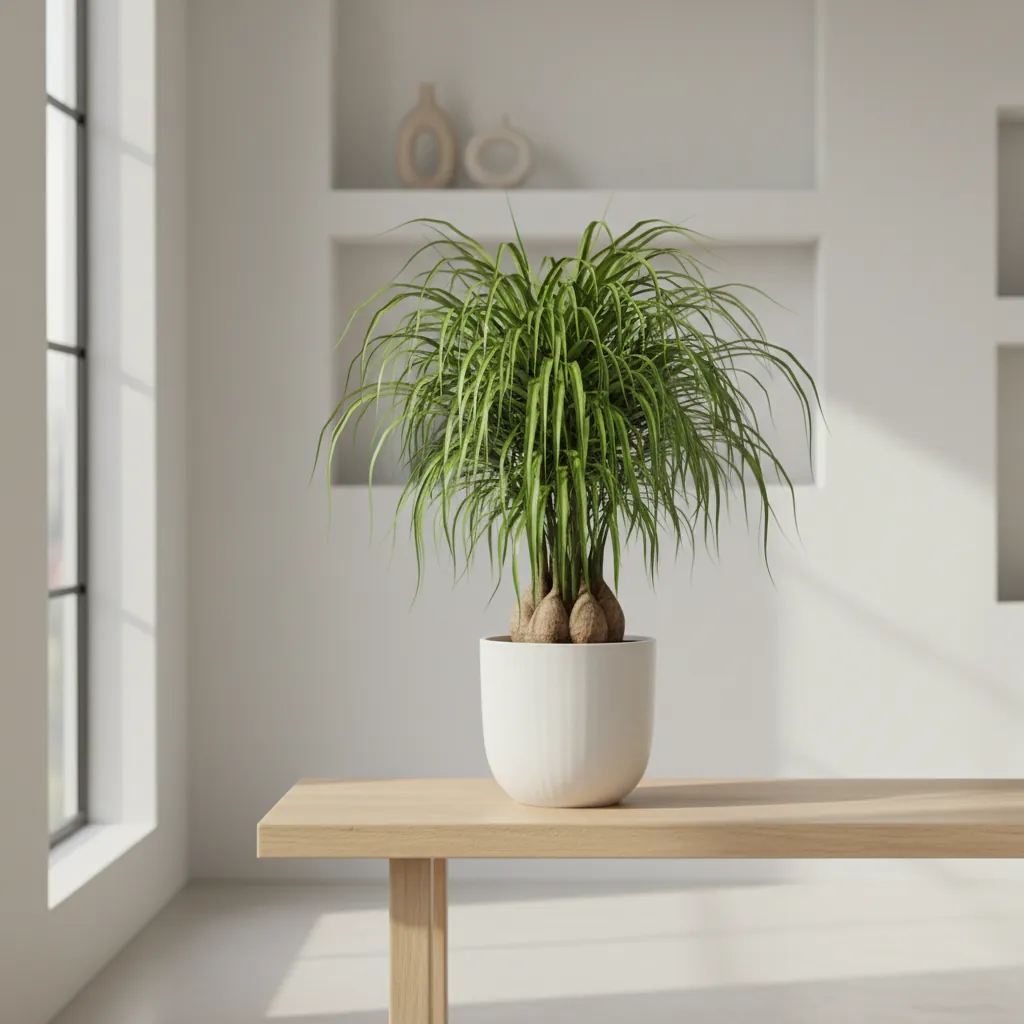
Ponytail Palm Care Guide: How to Grow This Low-Maintenance Houseplant
Contents
- Quick Care Summary
- How Often Should I Water My Ponytail Palm?
- What Light Conditions Does a Ponytail Palm Need?
- What Soil and Potting Mix Should I Use?
- How Do I Repot a Ponytail Palm?
- Can I Propagate a Ponytail Palm?
- What Are Common Ponytail Palm Problems?
The ponytail palm (Beaucarnea recurvata) is a unique and easy-to-care-for houseplant known for its bulbous trunk and long, cascading leaves that resemble a ponytail. Despite its name, it’s not a true palm but a succulent native to arid regions of Mexico. Its drought tolerance and striking appearance make it a favorite for plant enthusiasts.
Quick Care Summary
- Light: Bright, indirect light.
- Water: Water thoroughly when the top 2–3 inches of soil are dry.
- Humidity: Low humidity; prefers dry air.
- Temperature: 65°F–75°F (18°C–24°C).
- Soil: Fast-draining cactus or succulent mix.
- Toxicity: Pet-safe (non-toxic to cats and dogs).
How Often Should I Water My Ponytail Palm?
Ponytail palms store water in their bulbous base, making them highly drought-tolerant. Overwatering is the most common issue. Water thoroughly when the top 2–3 inches of soil are completely dry, allowing excess water to drain. Reduce watering in winter to once every 4–6 weeks.
| Season | Watering Frequency |
|---|---|
| Spring/Summer | Every 2–3 weeks |
| Fall/Winter | Every 4–6 weeks |
What Light Conditions Does a Ponytail Palm Need?
Ponytail palms thrive in bright, indirect light. Place them near a south-, east-, or west-facing window. They can tolerate moderate light but grow slower in low light. Rotate the plant occasionally to ensure even growth.
What Soil and Potting Mix Should I Use?
Use a well-draining soil mix, such as a cactus or succulent blend. A DIY mix of equal parts potting soil, sand, and perlite works well. Always plant in a pot with drainage holes to prevent root rot.
How Do I Repot a Ponytail Palm?
Repot every 2–3 years or when the bulbous base outgrows the pot. Choose a pot slightly larger than the current one, leaving about an inch of space around the trunk. Avoid burying the base deeper than it was originally planted.
Can I Propagate a Ponytail Palm?
Ponytail palms can be propagated from offsets (baby plants) that grow at the base. Wait until the offset is at least 4 inches tall, then cut it off with a sterile tool. Let the cut dry for a few days, apply rooting hormone, and plant in a well-draining mix.
What Are Common Ponytail Palm Problems?
- Yellow Leaves: Sign of overwatering or root rot. Let the soil dry completely before watering again.
- Brown Leaf Tips: Caused by underwatering, low humidity, or salt buildup from fertilizer. Trim brown tips and adjust care.
- Spider Mites or Scale: Wipe leaves with soapy water or use insecticidal soap.
| Issue | Cause | Solution |
|---|---|---|
| Yellow Leaves | Overwatering | Let soil dry completely |
| Brown Leaf Tips | Underwatering/low humidity | Increase watering frequency |
| Spider Mites/Scale | Pests | Clean leaves with soapy water |
FAQ
1. Is the ponytail palm toxic to pets?
No, ponytail palms are non-toxic to cats and dogs.
2. Why is my ponytail palm leaning?
Leaning usually occurs when the plant reaches toward light. Rotate it regularly to encourage even growth.
3. How fast does a ponytail palm grow?
It’s a slow-growing plant, especially indoors. Growth accelerates with bright light and proper care.
4. Can I keep my ponytail palm outdoors?
Yes, if you live in a warm, dry climate (USDA zones 9–11). Protect it from frost and intense midday sun.
5. Why are the leaves drying out?
Dry leaves indicate underwatering or low humidity. Water more frequently and trim damaged leaves.
Related guides
- How to Care for Aloe Vera: A Complete Guide to Thriving Plants
- Jade Plant Care Guide
- String of Hearts Care Guide: How to Grow Ceropegia Woodii Successfully
- How to Care for String of Pearls Plants
- Ultimate Succulent Care Guide