How to Repot a Houseplant: A Complete Guide
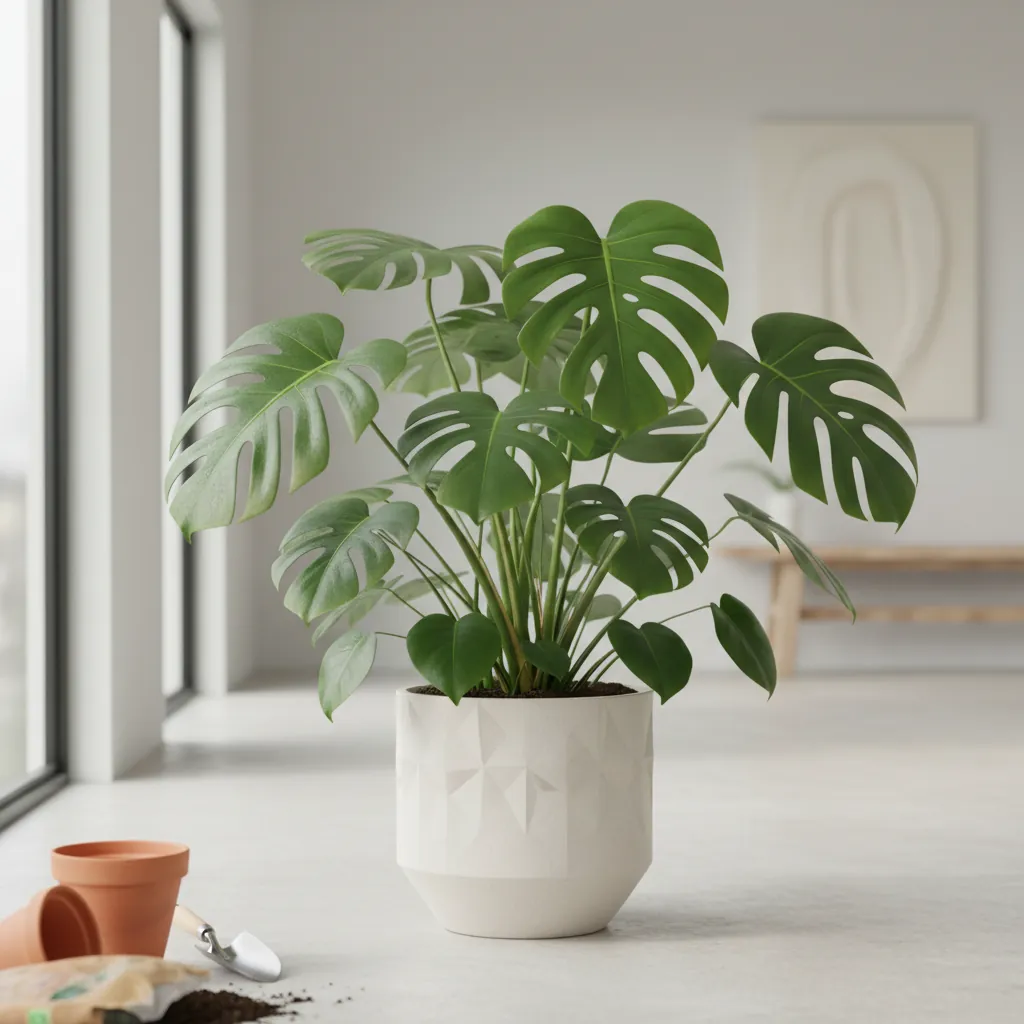
How to Repot a Houseplant: A Complete Guide
Contents
- Quick Care Summary
- Why Repot a Houseplant?
- When to Repot
- Steps to Repot Your Monstera
- Watering
- Light & Placement
- Soil & Repotting
- Propagation
- Common Problems
The Monstera deliciosa, commonly known as the Swiss Cheese Plant, is a popular houseplant prized for its large, glossy leaves with unique fenestrations (holes). Its tropical charm and relatively low-maintenance care make it a favorite for indoor plant enthusiasts. Repotting your Monstera is essential to ensure healthy growth and prevent rootbound issues.
Quick Care Summary
- Light: Bright, indirect light
- Water: Water when the top 2-3 inches of soil are dry
- Humidity: Prefers high humidity (60-80%)
- Temperature: Keep between 65-85°F (18-29°C)
- Soil: Well-draining, peat-based potting mix
- Toxicity: Toxic to pets if ingested
Why Repot a Houseplant?
Repotting is necessary to provide your plant with fresh nutrients, more space for root growth, and improved soil drainage. Signs your Monstera needs repotting include roots growing out of drainage holes, slowed growth, or the plant becoming top-heavy and tipping over.
When to Repot
The best time to repot is during the spring or early summer when your plant is actively growing. Avoid repotting in winter, as the plant’s dormant state makes it more susceptible to stress.
Steps to Repot Your Monstera
What You’ll Need
- A new pot (1-2 inches larger in diameter than the current one)
- Fresh, well-draining potting mix
- Pruning shears (for root trimming if necessary)
- Lava rocks or gravel (optional, for drainage)
Step-by-Step Guide
- Remove the Plant: Gently turn the plant sideways, hold the base, and tap the pot to loosen the root ball. Slide the plant out carefully.
- Loosen the Roots: Use your fingers to untangle and loosen the roots. Trim any circling or dead roots with pruning shears.
- Prepare the New Pot: Add a layer of fresh potting mix to the bottom. If the pot lacks drainage, place a layer of lava rocks or gravel first.
- Position the Plant: Place the Monstera in the center of the new pot, ensuring it sits at the same depth as before. Fill around the roots with fresh soil, gently pressing to eliminate air pockets.
- Water Thoroughly: Water the plant well to help it settle into its new home. Avoid fertilizing for at least 4-6 weeks.
Watering
Monsteras prefer slightly moist soil but dislike soggy conditions. Water when the top 2-3 inches of soil feel dry and ensure excess water drains away to prevent root rot.
Light & Placement
Place your Monstera in bright, indirect light, such as near a north or east-facing window. Avoid direct sunlight, which can scorch the leaves.
Soil & Repotting
Use a peat-based, well-draining potting mix enriched with perlite or orchid bark. Repot every 12-18 months or when the plant shows signs of being rootbound.
Propagation
Monsteras are easy to propagate via stem cuttings. Cut below a node (where leaves and roots grow) and place the cutting in water or moist soil. Roots will develop in 2-4 weeks.
Common Problems
- Yellow Leaves: Often caused by overwatering or insufficient light.
- Brown Tips: Indicates low humidity or underwatering.
- Pests: Watch for spider mites or mealybugs. Treat with neem oil or insecticidal soap.
- Root Rot: Caused by waterlogged soil. Ensure proper drainage and adjust watering habits.
FAQ
1. How often should I repot my Monstera?
Repot every 12-18 months, or when roots outgrow the pot.
2. Can I repot my Monstera directly into a decorative pot without drainage?
No. Always use a pot with drainage holes, or place the nursery pot inside a decorative cachepot.
3. What if my Monstera becomes too large?
You can prune the plant to control its size and propagate the cuttings to grow new plants.
4. Is Monstera toxic to pets?
Yes, Monstera is toxic to cats and dogs if ingested. Keep it out of reach of pets.
Related guides
- Areca Palm Care Guide
- Best Plants for Bathrooms: Top Picks for High Humidity
- Bird of Paradise Plant Care: Complete Indoor Growing Guide
- Boston Fern Care Guide: How to Keep Your Fern Thriving
- Bromeliad Care Guide: How to Grow and Maintain Indoor Bromeliads